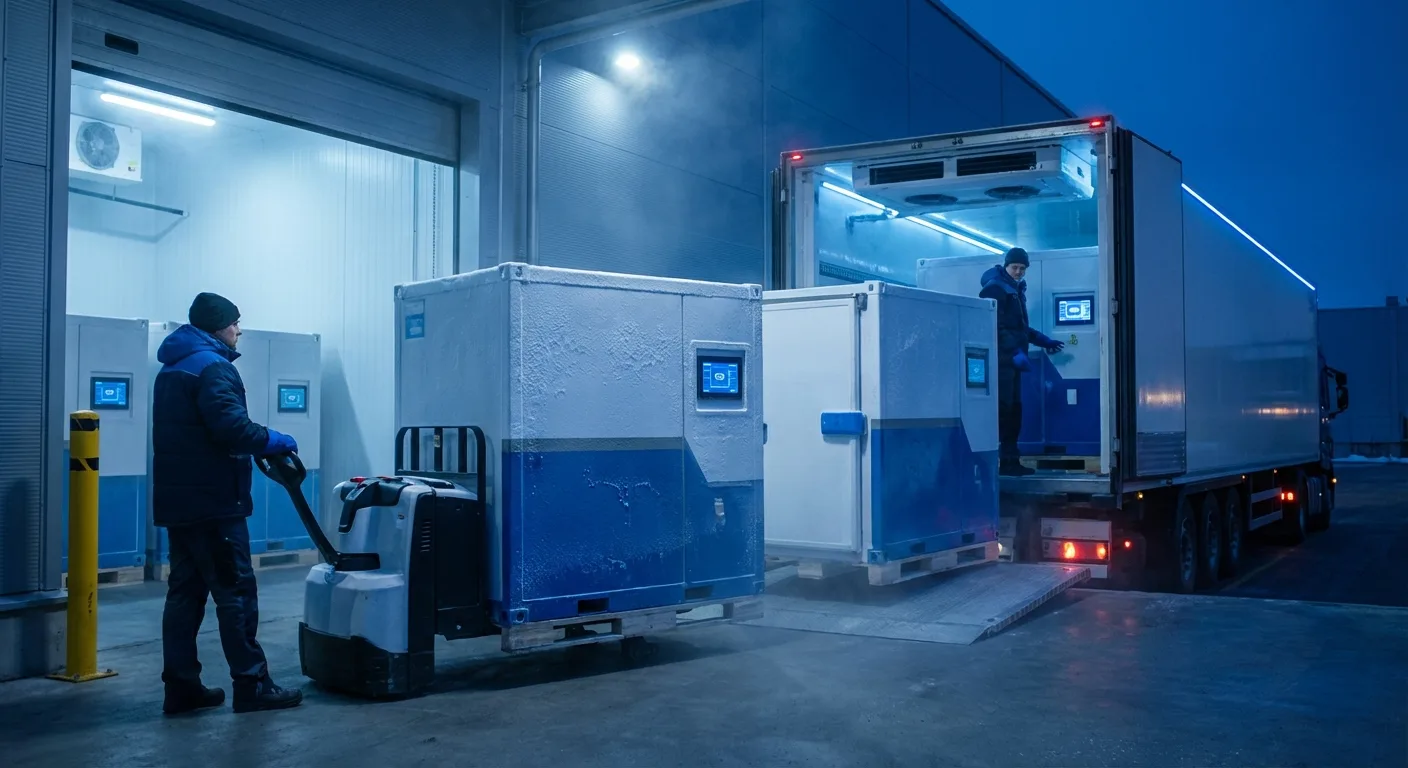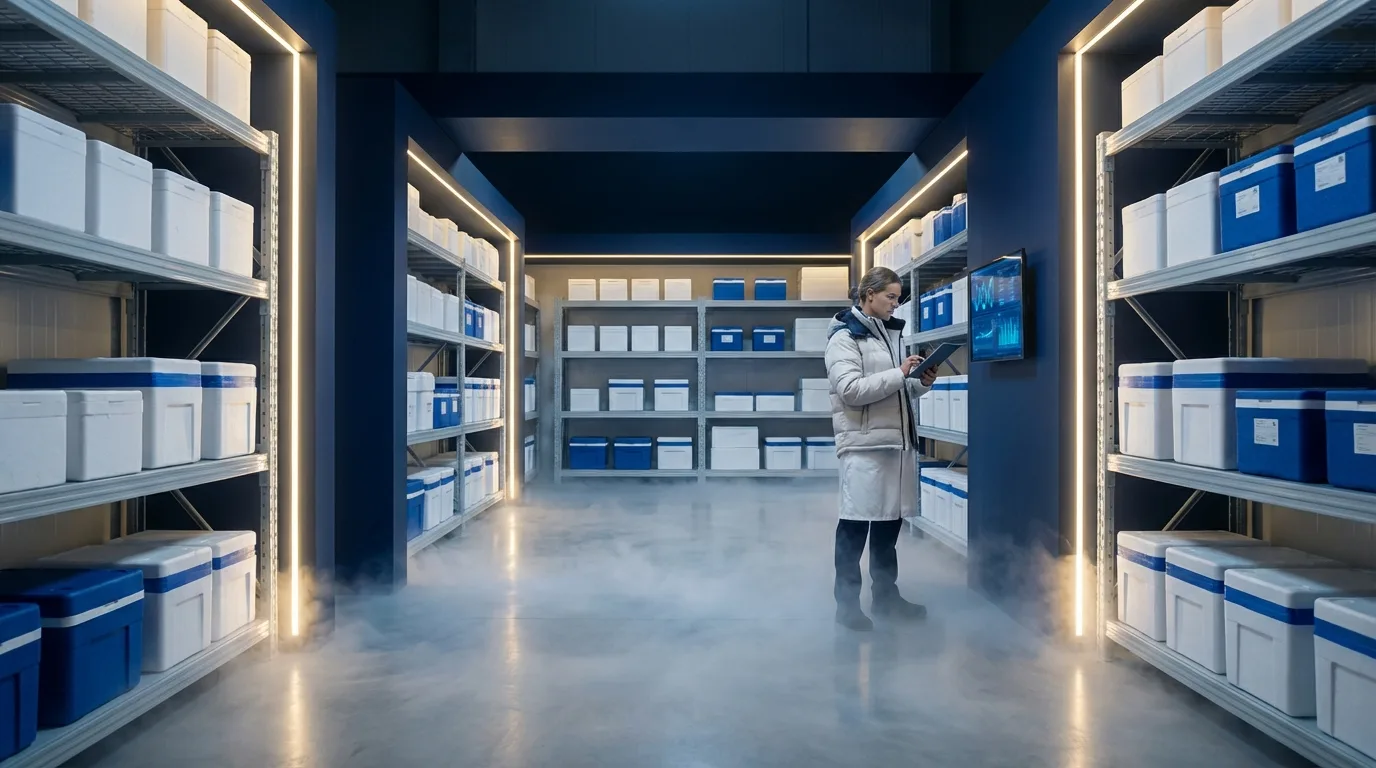
The pharmaceutical cold chain is the most demanding field among all cold chain applications in terms of temperature control precision, system reliability, and regulatory compliance. From insulin and blood products to mRNA vaccines, the efficacy and safety of pharmaceuticals are highly dependent on uninterrupted temperature control throughout the entire journey "from manufacturing to administration." GDP (Good Distribution Practice) serves as the core regulatory framework for international pharmaceutical logistics, establishing strict standards for HVAC system design, temperature verification methods, and deviation handling procedures in pharmaceutical warehousing facilities. This article systematically analyzes the design requirements for pharmaceutical cold chain warehousing and transportation temperature control systems from a professional refrigeration and HVAC engineering perspective, providing GDP-compliant engineering decision references for pharmaceutical manufacturers, logistics operators, and healthcare institutions[1].
1. GDP (Good Distribution Practice) Temperature Control Requirements Overview
GDP is the international standard governing quality assurance throughout the pharmaceutical distribution process, from manufacturer shipment to final user delivery. Its core principle is ensuring that pharmaceuticals maintain the quality attributes required by labeled storage conditions during storage and transportation, particularly temperature control management for temperature-sensitive drugs[2].
International GDP Regulatory Framework
Major international GDP regulations include WHO Technical Report Series No. 957 containing GDP guidelines, EU GDP Guidelines (2013/C 343/01), PIC/S GDP Guide (PE 011-1), and national regulations developed based on these international guidelines. In Taiwan, TFDA has promulgated the "Good Distribution Practice for Pharmaceuticals"[3], requiring pharmaceutical wholesalers to establish and maintain a GDP-compliant quality management system, with temperature control management being a key inspection item.
Core GDP temperature control requirements can be summarized as follows:
- Storage Condition Classification: Pharmaceuticals are labeled with storage temperatures based on stability data, with common classifications including ambient storage (15°C-25°C or not exceeding 30°C), refrigerated storage (2°C-8°C), frozen storage (-20°C and below), and ultra-low temperature storage (-60°C to -90°C)
- Temperature Mapping Verification: All pharmaceutical storage areas must undergo temperature mapping to demonstrate uniform temperature distribution within acceptable ranges through measured data
- Continuous Monitoring: Pharmaceutical storage areas must be equipped with calibrated temperature monitoring devices that continuously record temperature at sufficient sampling frequencies and maintain complete records
- Deviation Management: Temperature deviation detection, notification, assessment, and corrective procedures must be established to ensure deviations do not affect drug quality
- Equipment Qualification and Calibration: All temperature control-related equipment (HVAC systems, temperature recorders, sensors) must undergo Installation Qualification (IQ), Operational Qualification (OQ), and Performance Qualification (PQ), with regular calibration[4]
GDP Impact on HVAC Engineering
Compared to food cold chain, pharmaceutical cold chain GDP compliance places higher demands on refrigeration and HVAC engineering design. First, temperature control precision must be higher — refrigerated pharmaceuticals (2°C-8°C) have only a 6°C usable temperature range, and after accounting for sensor error and system fluctuation, the actual available design margin is quite limited. Second, system reliability must approach zero tolerance — any single point of failure such as chiller malfunction, power interruption, or control anomaly could result in high-value drug disposal losses. Furthermore, GDP requires complete written documentation of all temperature control design decisions, verification results, and change management, demanding a level of documentation far exceeding general cold chain standards.
2. Multi-Temperature Zone Design for Pharmaceutical Warehousing
A GDP-compliant pharmaceutical logistics warehouse center typically requires storage areas divided into four temperature levels based on drug labeled storage conditions. Each temperature zone's HVAC system design logic, equipment selection, and insulation methods differ, requiring customized planning for specific needs[5].
Controlled Ambient Zone (15°C-25°C)
Although ambient pharmaceutical storage appears not to require special refrigeration equipment, maintaining a stable 15°C-25°C environment in Taiwan's subtropical climate (summer outdoor temperatures reaching 35°C-38°C) still requires precise HVAC system design. Key design points include: HVAC unit capacity must be calculated for the most unfavorable climate conditions; supply air systems using all-air or fan coil units (FCU) with fresh air handling units (AHU) to ensure uniform temperature distribution; return air outlet positions must avoid short-circuiting with supply outlets; building envelope insulation directly affects HVAC loads and temperature stability.
Refrigerated Zone (2°C-8°C)
The refrigerated zone is the most core and challenging temperature zone in pharmaceutical warehousing. Vaccines, biologics, insulin, and certain antibody drugs all require storage within this temperature range. With only 6°C of usable temperature range, HVAC system design margins are extremely limited:
- Evaporator Design: Evaporator discharge air temperature should be controlled between 0°C and 2°C, preventing temperature dead zones below 2°C in direct airflow areas. Large-area, low-velocity designs are recommended to minimize supply/return temperature differential (TD value not exceeding 4K)
- Airflow Organization: Top-supply/top-return or side-supply/side-return patterns are recommended with air velocity controlled at 0.3-0.5 m/s, ensuring temperature uniformity in product stacking areas. Air deflectors or guide grilles should be installed to direct airflow through racking
- Defrost Management: Evaporator defrost causes temporary temperature rises; defrost timing should be scheduled during low-load periods with limited duration, avoiding storage temperature exceeding the 8°C upper limit
- Access and Transition Design: Personnel and product entry/exit frequency severely impacts storage temperature stability. An anteroom maintaining approximately 15°C should be installed at the entrance as a temperature buffer, combined with high-speed doors or air curtains to minimize cold air leakage
Frozen Zone (-20°C and Below)
Certain plasma products, specific vaccines, and biological samples require storage below -20°C. Frozen zone HVAC design focuses on low-temperature refrigeration efficiency and structural freeze prevention: panel insulation thickness must reach 150mm or more (PIR material, thermal conductivity 0.022 W/m·K); floor must have freeze protection heating systems to prevent soil frost heave; doors use double-layer airtight design with frame heaters to prevent seal freezing. Compressor system COP values decrease significantly at -20°C evaporation temperatures (approximately 1.5-2.0), requiring realistic energy consumption calculations.
Ultra-Low Temperature Zone (-60°C to -90°C)
The emergence of mRNA vaccines (such as COVID-19 vaccines) has expanded ultra-low temperature storage from a specialized need of select research institutions to a routine engineering requirement in the pharmaceutical supply chain. Ultra-low temperature systems typically employ cascade compression systems, with the high-temperature stage using R-404A or R-449A and the low-temperature stage using R-23 or R-508B, achieving evaporation temperatures of -80°C to -86°C. Panel insulation thickness must increase to 250mm-300mm, with special attention to thermal bridge isolation design to prevent dew point condensation at insulation layer joints.
3. Temperature Mapping Verification Methods
Temperature mapping is the core verification tool for GDP compliance, with the purpose of demonstrating through measured data that temperature distribution within pharmaceutical storage areas is uniform and continuously maintained within specified ranges. The quality of temperature mapping directly determines whether a facility can pass GDP inspections[1].
Pre-Mapping Preparation
Before temperature mapping execution, the following preparations must be completed: develop a written Mapping Protocol clearly defining the mapping purpose, acceptance criteria, sensor quantity and placement locations, recording time interval, mapping duration, and data analysis methods. All temperature data loggers must be calibrated by NIST or TAF-accredited laboratories, with calibration deviation not exceeding ±0.5°C and calibration certificates within their validity period. The outdoor temperature conditions during mapping should cover the most extreme seasonal conditions — WHO GDP guidelines recommend executing at least one complete mapping during both the hottest and coldest seasons[6].
Sensor Placement Principles
The number and placement of sensors is critical to mapping quality. General principles include:
- Minimum Placement Density: Small cold rooms (under 50 cubic meters) require at least 9 points; medium-sized rooms (50-500 cubic meters) at least 15-20 points; large rooms (over 500 cubic meters) add 2-3 points per additional 100 cubic meters
- Required Placement Locations: All eight corners of the storage body, geometric center, directly below evaporator discharge, farthest point from evaporator, near door area, near return air outlet, below ceiling (15 cm from top), and above floor (15 cm from ground)
- Risk Area Densification: Additional sensors should be placed at sun-exposed wall interior surfaces, near electrically heated door frames, below lighting fixtures, and at pipe penetration points
Mapping Execution and Data Analysis
Mapping execution duration must be at least 72 continuous hours (WHO GDP recommendation), with recording intervals not exceeding 5 minutes. During mapping, normal operational conditions should be simulated, including door opening frequency, personnel movement, and product entry/exit operations. Data analysis must include: maximum temperature, minimum temperature, average temperature, and standard deviation for each monitoring point; identification of hot spot and cold spot locations; Mean Kinetic Temperature (MKT) calculations[7]. Analysis results must be presented in a written report including placement diagrams, temperature trend charts, statistical summaries, and acceptance conclusions, reviewed and signed by the Quality Assurance (QA) department.
Need professional planning for pharmaceutical warehouse temperature control systems? Contact our engineering team for GDP-compliant engineering design solutions.
4. Backup System Design: Dual Chillers, UPS, and Emergency Generators
Pharmaceutical cold chain reliability requirements far exceed those of food cold chain or general commercial HVAC. A single cold room temperature loss incident can result in drug disposal losses of millions or even tens of millions of dollars, not to mention potential patient medication safety risks. Therefore, GDP explicitly requires pharmaceutical storage facilities to have adequate backup mechanisms to eliminate any single point of failure[2].
Dual Chiller Redundancy Configuration
Pharmaceutical cold room refrigeration compressor systems should adopt at least N+1 redundancy configuration. For a cold room with a design refrigeration load of 50 kW, two independent 50 kW units can be configured (1+1 configuration), with each unit capable of independently handling the full load. The two units alternate operation (Lead-Lag mode), both distributing equipment lifespan evenly and enabling automatic takeover when one unit fails. The key to redundancy configuration is "independence" — the power circuits, control loops, and refrigerant piping of both systems should be mutually independent.
Uninterruptible Power Supply (UPS)
UPS serves as "bridging power" in pharmaceutical cold chains, maintaining uninterrupted operation of critical equipment during the gap between utility power interruption and emergency generator startup and stabilization (typically 10-60 seconds). UPS protection priorities include: temperature monitoring systems, BMS/SCADA control systems, alarm and communication systems, and emergency lighting and access control systems. UPS capacity should provide at least 30 minutes of backup time.
Emergency Generator Sets
Emergency generators are the last line of defense in pharmaceutical cold chain backup systems. Generator capacity must support simultaneous operation of all refrigeration compressors, evaporator fans, cooling water pumps, control systems, and basic lighting. Automatic Transfer Switches (ATS) must complete automatic switching within 10-30 seconds of utility power interruption[8]. Fuel reserves should maintain at least 72 hours of full-load operation to handle extended power outages during typhoons and similar events.
5. Special Requirements for Vaccine Cold Chain
Vaccines, as the most representative temperature-sensitive products in pharmaceutical cold chains, require cold chain designs that not only meet general GDP requirements but also address vaccine-specific temperature sensitivity characteristics and distribution patterns[9].
Traditional Vaccine Cold Chain (2°C-8°C)
The vast majority of traditional vaccines require 2°C-8°C storage. The key difference between vaccine cold chain and general pharmaceutical refrigeration is that vaccines must not freeze — many vaccines suffer irreversible potency loss after freezing. Engineering countermeasures include: evaporator discharge air temperature lower limit set above 0°C with low-temperature cutoff protection; supply air duct design avoiding direct cold air blowing on product surfaces; multiple temperature monitoring points deployed within the cold room.
Frozen Vaccine Storage (-20°C)
Certain vaccines (such as varicella vaccine, specific MMR vaccine brands) require storage below -20°C. Engineering design for this temperature zone is similar to general food cold storage but requires attention to GDP-specific requirements: temperature recorder accuracy must maintain ±0.5°C at -20°C environments; defrost control must ensure storage temperatures do not exceed -15°C during defrost; entry/exit operation SOPs must strictly limit door opening time.
Ultra-Low Temperature Vaccine Storage (-60°C to -90°C)
mRNA vaccine ultra-low temperature storage requirements have created entirely new cold chain engineering challenges. Current ultra-low temperature solutions include two main technology paths:
- Cascade Mechanical Refrigeration Systems: Two-stage or three-stage cascade compression systems achieving stable temperatures of -80°C to -86°C, suitable for large-capacity, long-term stable centralized storage needs
- Dry Ice and Liquid Nitrogen Auxiliary Systems: Supplementing mechanical refrigeration with dry ice (solid CO2, -78.5°C) or liquid nitrogen (LN2, -196°C) as emergency cooling sources, providing additional safety margin when mechanical systems fail
Ultra-low temperature facility insulation design is critical to engineering success. Total panel thickness must reach 300mm or more, with multi-layer composite construction and complete vapor barrier to prevent external moisture from penetrating and condensing within the insulation layer[10].
6. Continuous Monitoring and Deviation Handling SOP
GDP temperature control compliance is not a one-time construction project but a continuous commitment spanning the entire facility lifespan. The continuous monitoring system and deviation handling procedures are the two pillars ensuring daily operational compliance[3].
Continuous Temperature Monitoring System Architecture
A GDP-compliant continuous temperature monitoring system should include the following layers from hardware to software:
- Sensing Layer: Calibrated digital temperature sensors (accuracy ±0.5°C), deployed at critical monitoring points identified through temperature mapping (covering at minimum the Hot Spot and Cold Spot). Sensor calibration cycle is typically annual
- Data Acquisition Layer: Data loggers or PLC/DDC controllers continuously sampling and storing temperature data at intervals not exceeding 5 minutes, with local buffering capacity of at least 30 days
- Transmission Layer: Data upload to central monitoring platform via wired Ethernet or 4G/5G wireless networks with encrypted transmission protocols
- Monitoring Platform Layer: Central SCADA or BMS system providing real-time temperature display, historical trend analysis, alarm management, and report generation, with 21 CFR Part 11 compliant electronic signatures and audit trail capabilities[11]
- Alert Notification Layer: Multi-channel real-time alert notifications (SMS, Email, LINE, APP push) with at least two levels: Warning (triggered when approaching limits) and Alarm (triggered when exceeding limits)
Temperature Deviation Handling SOP
When the monitoring system detects temperature deviations, a predefined SOP must be activated:
- Immediate Response: Confirm deviation status within 15 minutes of alarm receipt, activate emergency measures (such as starting backup units, closing storage doors, suspending receiving/shipping operations)
- Deviation Recording: Thoroughly document deviation occurrence time, duration, maximum/minimum temperatures, affected areas, affected drug batch numbers and quantities, and emergency measures taken
- Quality Assessment: QA personnel evaluate the impact of temperature exposure during deviation on drug quality based on stability data and MKT calculations
- Root Cause Investigation: Analyze deviation root causes using tools such as Ishikawa diagrams or the 5 Whys method
- Corrective and Preventive Actions (CAPA): Develop corrective actions to eliminate causes and preventive actions to prevent recurrence, with defined completion deadlines and responsible personnel[12]
Periodic Revalidation and Change Management
Temperature mapping is not a one-time activity. GDP requires re-execution under the following circumstances: periodic revalidation (typically annually or biennially), after HVAC system equipment replacement or major repairs, after warehouse layout or rack configuration changes, and after significant changes to stored products or stacking methods. Any changes that may affect temperature distribution must be assessed through a Change Control procedure.
Conclusion
Pharmaceutical cold chain GDP compliance engineering represents the deep intersection of refrigeration and HVAC technology with pharmaceutical quality management. From multi-temperature zone HVAC design for drug warehousing and scientific temperature mapping verification methods, to dual-chiller backup reliability engineering, cutting-edge ultra-low temperature vaccine storage technology, and quality management systems for continuous monitoring and deviation handling — every element requires cross-disciplinary integration of refrigeration and HVAC engineering expertise with GDP regulatory knowledge.
As the biologics and mRNA vaccine market continues to grow rapidly, and as Taiwan's Ministry of Health and Welfare continues to strengthen GDP inspection intensity, pharmaceutical logistics operators will face increasingly urgent demand for internationally compliant pharmaceutical cold chain engineering designs. Investing in building a pharmaceutical cold chain facility with rigorous design, thorough verification, comprehensive monitoring, and complete backup mechanisms is not only a basic requirement for regulatory compliance but a professional responsibility for safeguarding public medication safety.