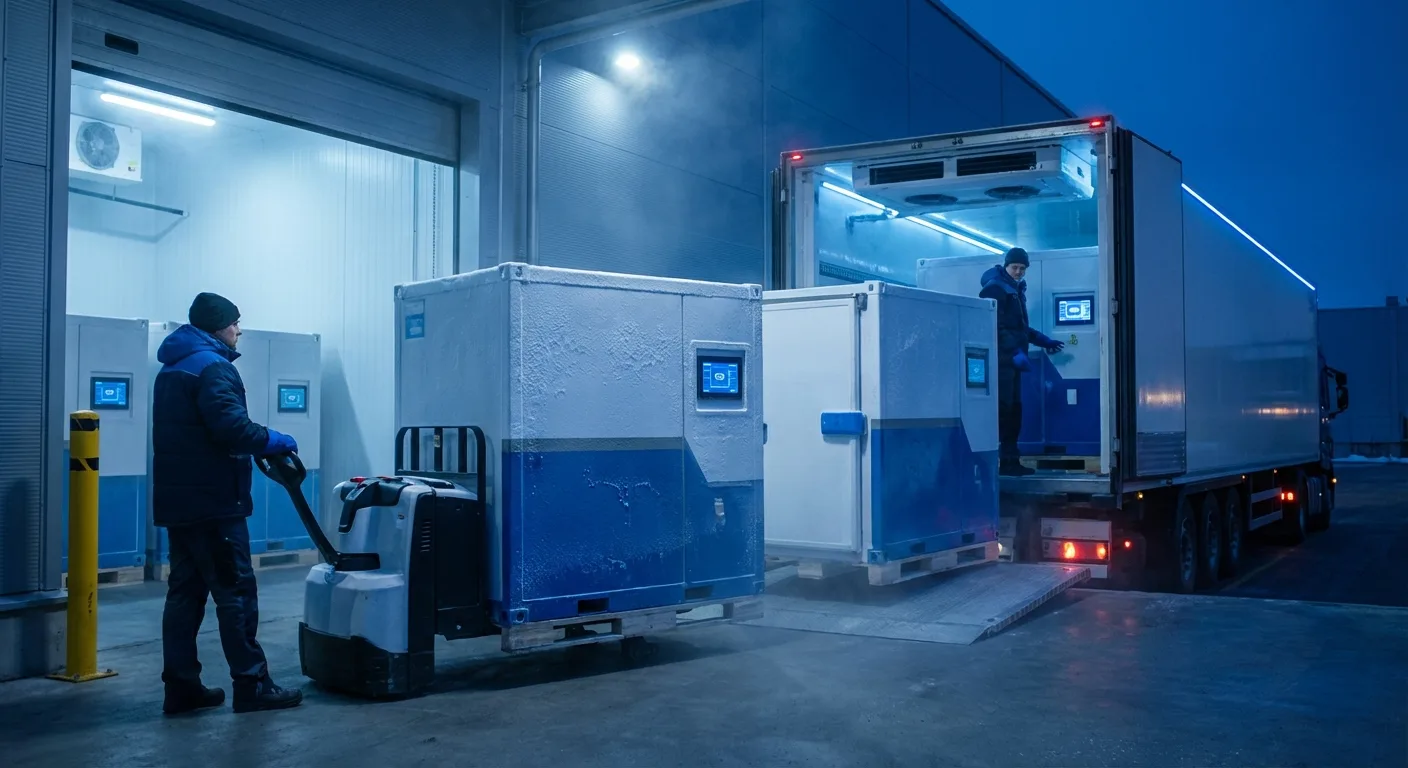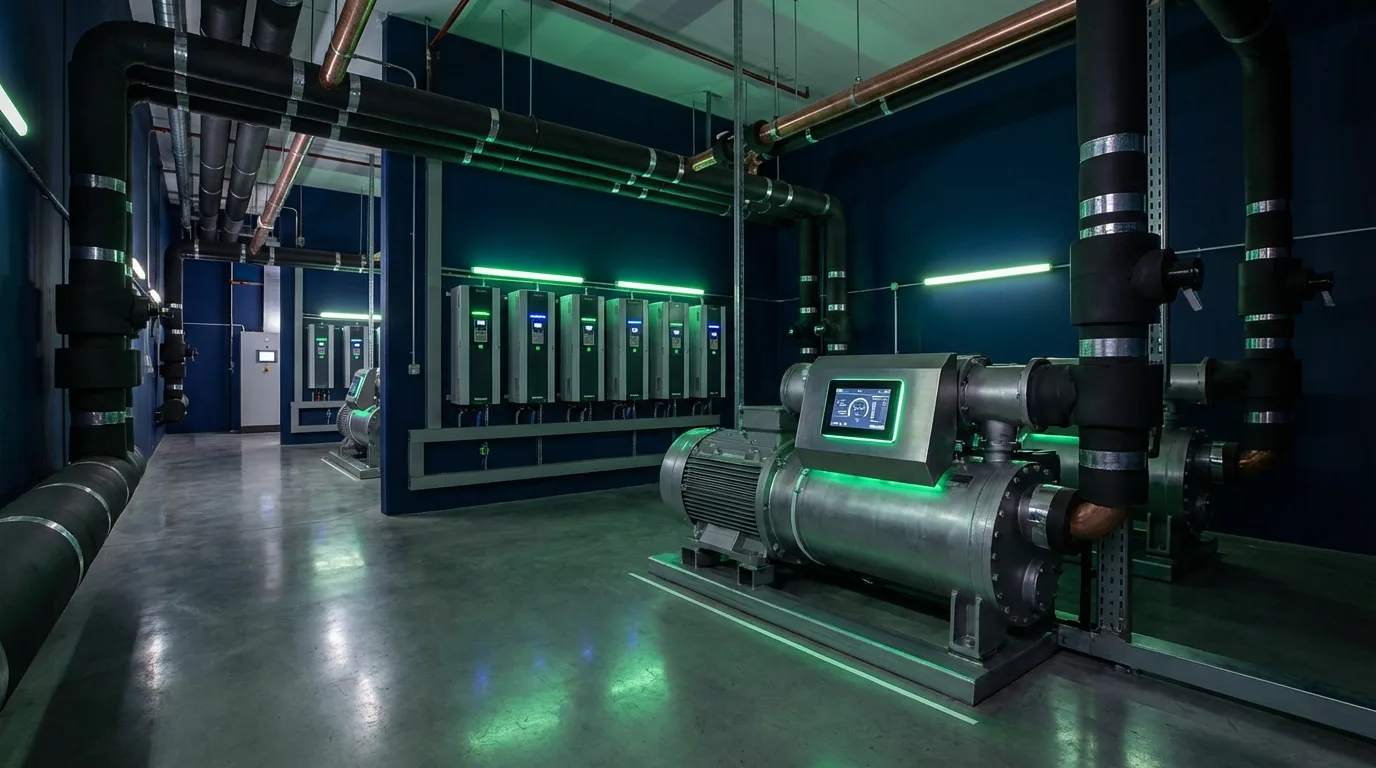
Refrigeration and air conditioning systems typically account for 60%--70% of total electricity consumption in cold chain facilities. Under the dual pressures of rising electricity prices and carbon fee implementation, energy efficiency improvements have evolved from "nice to have" to "business necessity." However, many enterprises lack systematic analysis methods when facing energy investment decisions -- they don't know where the true energy consumption baseline lies, are uncertain about the actual benefits of various improvement measures, and cannot precisely calculate payback periods and net present values. From the professional perspective of a refrigeration and air conditioning engineering consultant, this article provides a comprehensive analysis of six key aspects of cold chain system energy efficiency ROI: from energy consumption structure analysis and baseline establishment, compressor and VFD energy savings, evaporator and condenser optimization, building envelope improvements, waste heat recovery integration, to investment return calculation models and carbon credit benefit assessment[1], providing a complete engineering economic analysis framework for enterprise cold chain energy efficiency decisions.
1. Cold Chain System Energy Consumption Structure Analysis and Baseline Establishment
The first step in any energy improvement plan is to precisely understand the current energy consumption status of existing systems. Without a reliable Energy Baseline, it is impossible to quantify improvement benefits or establish a convincing ROI analysis. According to the ISO 50001 Energy Management System standard[2] methodology, energy baseline establishment should cover at least 12 months of complete operating cycles to account for seasonal load variations, production schedule fluctuations, and maintenance shutdowns.
Cold Chain System Energy Consumption Breakdown
A typical cold storage logistics center has the following approximate electricity consumption breakdown:
- Compressor Units: Accounting for 40%--50% of total electricity, these are the largest single group of power-consuming equipment in cold chain facilities. Compressor efficiency is directly affected by condensing temperature, evaporating temperature, refrigerant charge, and mechanical wear
- Condenser Systems: Accounting for 10%--15%, including condenser fans, cooling water pumps, and cooling tower fans. In high-humidity regions like Kaohsiung, maintaining condenser heat rejection efficiency is particularly important
- Evaporator Fans: Accounting for 8%--12%, evaporator fans operate continuously 24 hours in cold storage, and defrost mode settings significantly impact energy consumption
- Lighting Systems: Accounting for 3%--5%, traditional fluorescent tubes have reduced luminous efficiency and increased failure rates in low-temperature environments, and their heat dissipation adds to the refrigeration load
- Dock Equipment and Access Control: Accounting for 5%--8%, including high-speed doors, air curtains, dock levelers, and other equipment. Cold loss during door openings is often underestimated
- Control and Monitoring Systems: Accounting for 2%--3%, including PLC, BMS, temperature monitoring, and security system power consumption
- Others: Accounting for 10%--15%, including office area air conditioning, forklift charging, wastewater treatment, and other auxiliary equipment
Energy Audit Implementation Methods
According to the Bureau of Energy's Energy Audit Implementation Regulations[3], enterprises with annual electricity consumption exceeding 8 million kWh are classified as major energy users and must conduct periodic energy audits. Cold chain facility energy audits should particularly focus on the following items: installing kWh meters on compressor units to record independent power consumption of each unit, using infrared thermography to detect thermal bridges and cold leakage points in cold storage enclosures, using digital pressure gauges and temperature sensors to record system suction and discharge pressures and temperatures to calculate actual operating COP values (Coefficient of Performance), and using anemometers and thermometers to measure evaporator and condenser entering and leaving air temperature differentials to assess heat transfer efficiency degradation.
After completing data collection, Energy Performance Indicators (EnPI) should be established as standards for tracking improvement effectiveness. Common EnPIs for cold chain facilities include: electricity consumption per unit storage volume (kWh/m³/year), electricity consumption per ton of throughput (kWh/ton), and overall system COP. Comparing these indicators with ASHRAE 90.1-2022[4] recommended values or industry benchmarks enables identification of improvement directions with the greatest energy saving potential.
2. Energy Savings from High-Efficiency Compressors and Variable Frequency Drives
The compressor is the heart of the refrigeration system and the single highest energy-consuming equipment. Compressor energy improvements typically deliver the highest ROI and are the top priority for cold chain energy efficiency improvements[5].
High-Efficiency Compressor Replacement Benefit Analysis
Over the past decade, screw compressor energy efficiency improvements have been quite significant. For low-temperature freezing applications (evaporating temperature -35 degrees C, condensing temperature 35 degrees C), new-generation high-efficiency screw compressors can achieve COP values of 1.8--2.2, compared to units operating for over ten years (COP approximately 1.3--1.6), representing an efficiency improvement of 25%--40%. For a cold storage facility equipped with three 200 HP screw compressors, with annual electricity consumption of approximately 2.6 million kWh, replacement with high-efficiency units can save 500,000--800,000 kWh annually. At an electricity rate of NTD 4.5 per kWh, the annual electricity cost savings amount to approximately NTD 2.25--3.6 million.
Compressor replacement investment decisions should consider the following factors:
- Equipment Age and Degradation Curve: After 8--10 years of operation, internal clearances increase due to wear, volumetric efficiency decreases by 1%--2% annually, and failure risk increases significantly
- Refrigerant Compatibility: If simultaneous refrigerant transition is planned (e.g., from R-404A to R-448A or R-449A), compressor replacement can be incorporated into the overall system retrofit plan
- Part-Load Efficiency: New compressors demonstrate particularly superior efficiency at part loads (50%--75%) compared to older units, suitable for cold chain facilities with significant load variations
Variable Frequency Drive (VFD) Energy Savings Calculation
Variable Frequency Drives (VFD) precisely match refrigeration capacity to actual load by adjusting compressor speed, avoiding energy waste from traditional fixed-speed compressors at part load. According to the Fan Affinity Laws[4], fan and pump power is proportional to the cube of speed -- when speed is reduced to 80%, power consumption is only 51% of rated value; when speed is reduced to 60%, power is only 21.6%.
In practical cold chain applications, the energy savings benefits of variable frequency compressors are primarily realized in the following scenarios: nighttime non-operating periods when refrigeration load decreases 30%--50% (no incoming/outgoing goods, no lighting heat, lower ambient temperatures), allowing compressors to operate at reduced speed; when winter outdoor temperatures are lower and refrigeration loads naturally decrease, VFD control can automatically reduce capacity; and during production off-seasons when inventory levels are lower, reducing refrigeration loads accordingly. Across all annual operating scenarios, variable frequency compressors typically save 15%--30% of compressor electricity compared to fixed-speed units.
Similarly, the benefits of adding VFDs to condenser fans and evaporator fans are quite considerable. Condenser fans can dynamically adjust speed based on ambient temperature and condensing pressure, while evaporator fans can briefly operate at high speed during post-defrost recovery phases and reduce speed for energy savings during other periods. The investment payback period for adding VFDs to fan equipment is typically 1.5--3 years, making it one of the most cost-effective energy saving measures.
3. Evaporator/Condenser Optimization and Smart Defrost Control
The evaporator and condenser are the two major heat exchangers in the refrigeration system, and their heat transfer efficiency directly determines the overall system operating efficiency. As service years increase, scaling, frosting, corrosion, and fin deformation on heat exchanger surfaces all lead to heat transfer efficiency degradation, which in turn increases compressor energy consumption[6].
Evaporator Performance Recovery and Upgrade
The most common cause of performance degradation in cold storage evaporators is frost buildup. When the evaporator surface temperature falls below the dew point temperature, moisture in the air condenses as frost on the fin surfaces. The thermal conductivity of frost is only 1/8000 that of aluminum, so even a thin frost layer (2--3mm) is sufficient to significantly reduce heat transfer efficiency, causing evaporating temperature to drop and compressor power to increase. Research shows that evaporator frosting commonly causes system COP to decrease by 10%--25%.
Evaporator optimization strategies include:
- Increasing Evaporator Area: Replacing existing evaporators with models having 20%--30% larger surface area can raise evaporating temperature by 2--3 degrees C. Each 1 degree C increase in evaporating temperature reduces compressor power consumption by approximately 3%--4%
- Hydrophilic Coating Treatment: Applying hydrophilic coatings to fin surfaces allows condensed water to slide off more easily rather than accumulating as frost, extending defrost intervals and improving heat transfer efficiency
- Electronic Expansion Valve (EEV) Upgrade: Replacing traditional Thermostatic Expansion Valves (TEV) with Electronic Expansion Valves improves superheat control precision from plus/minus 3 degrees C to plus/minus 1 degree C, effectively increasing the evaporator's effective heat transfer area and improving system COP by approximately 5%--10%
Smart Defrost Control Energy Savings
Traditional time-initiated, time-terminated defrost modes are typically set to defrost every 4--6 hours for 20--30 minutes each time. However, actual frost formation rates vary significantly depending on ambient humidity, incoming goods frequency, and door opening frequency. In many scenarios, timed defrost leads to unnecessary defrost operations -- the evaporator is heated for defrost before frost has actually formed, wasting energy and causing storage temperature fluctuations.
Demand Defrost uses sensors to monitor the actual frost condition of the evaporator (such as measuring evaporator entering/leaving air temperature differential, differential pressure across fins, or using optical sensors to detect frost layer thickness), initiating the defrost procedure only when actually needed. In practice, smart defrost can reduce defrost cycles by 30%--50%, with energy savings from each defrost including: defrost heater electricity consumption, additional compressor work needed to bring storage temperature back after defrost-induced temperature rise, and drip tray heater electricity. Overall, smart defrost control can reduce total cold storage energy consumption by 5%--10%.
Condenser Cleaning Maintenance and Efficiency Improvement
Condenser heat rejection efficiency degradation is another frequently overlooked factor in increased energy consumption. Air-cooled condenser fins in outdoor environments readily accumulate dust, oil deposits, and salt (especially in Kaohsiung's coastal industrial areas), leading to increased airflow resistance and reduced heat transfer area. For every 1 degree C increase in condensing temperature, compressor power consumption increases by approximately 2.5%--3.5%[4]. Regular cleaning of condenser fins (recommended monthly) and maintaining design condensing temperature differential is the lowest-investment energy saving measure with immediate results. For water-cooled condensing systems, cooling water quality management (scale prevention, corrosion prevention, and biological control) is equally critical for condensing efficiency and equipment lifespan.
Need energy diagnostics and improvement solutions for your cold chain system? Contact our engineering team for a customized energy investment analysis report.
4. Cold Storage Building Envelope Improvement and Access Control Management
The cold storage building envelope is the first line of defense against external heat infiltration. Degradation of envelope insulation performance directly increases refrigeration load, while warm and humid air infiltration through door openings is one of the primary sources of cooling loss. These two improvement measures require relatively low investment but deliver lasting and stable energy savings[7].
Insulation Performance Diagnosis and Repair
Cold storage panels (typically PUR or PIR sandwich panels) may experience insulation performance degradation after 10--15 years of use for the following reasons: aging and cracking of sealant at panel joints creating thermal bridges, deterioration and shrinkage of interior foam material due to long-term thermal cycling, failure of floor anti-freeze heating systems causing ground frost heave and deformation affecting panel seal integrity, and forklift collision damage to panels disrupting insulation layer continuity.
Using infrared thermography to perform comprehensive scanning of cold storage exterior surfaces is the most effective method for diagnosing insulation performance. Areas showing abnormally low temperatures on thermal images indicate cold leakage points or thermal bridge locations. For locally damaged panels, on-site foam injection repair or replacement of damaged panels can be employed; for overall insulation performance degradation, the investment benefits of complete panel renovation need to be evaluated.
For a 3,000 ping (approximately 9,900 m2) cold storage facility set at -25 degrees C, if the average heat transfer coefficient (U-value) of the building envelope has degraded from the design value of 0.20 W/m²K to 0.30 W/m²K, the increased heat infiltration is approximately 50 kW, translating to an annual increase of approximately 150,000--200,000 kWh, with electricity cost increases of approximately NTD 700,000--900,000. An investment in panel repair or partial replacement (budget approximately NTD 1--2 million) would have a payback period of only 1.5--3 years.
High-Speed Doors and Access Control Systems
When cold storage doors open, warm and humid outside air rushes into the storage due to density differences (warm air has lower density), causing not only cooling loss but also accelerated evaporator frost formation due to moisture condensation. Research shows that cooling loss per cold storage door opening can reach 50--200 kW (depending on door area and indoor/outdoor temperature differential). With frequent daily loading/unloading operations (e.g., 100--200 door openings per day), door opening cooling loss can account for 15%--30% of total facility refrigeration load[8].
Effective access control energy saving measures include:
- High-Speed Doors: High-speed doors with opening/closing speeds of 1.5--2.5 m/s can reduce each door opening time to 3--5 seconds, significantly reducing warm air infiltration compared to traditional sliding doors at 15--30 seconds
- Air Curtains: Installing air curtains above doorways to produce high-velocity downward airflow creates an invisible air barrier that can block 70%--80% of warm air infiltration. Air curtains work best when combined with high-speed doors
- Anteroom Buffer Design: Installing an anteroom at 5 degrees C--10 degrees C between the cold storage and ambient temperature areas reduces the temperature differential across the storage door, decreasing heat exchange during door openings. The anteroom is equipped with an independent air conditioning system and interlocking logic to prevent simultaneous opening of inner and outer doors
- PVC Strip Curtains: Installing overlapping transparent PVC strip curtains on the inside of high-speed doors as a second barrier, through which forklifts can pass directly, further reducing cooling loss
5. Waste Heat Recovery and System Integration Energy Solutions
During the refrigeration process, the refrigeration system discharges heat absorbed at the low-temperature end plus heat generated by compressor work entirely to the high-temperature end (condenser). In traditional systems, this thermal energy is completely wasted. However, through waste heat recovery technology, it can be converted into useful thermal energy, achieving dual benefits of "one machine, two uses"[9].
Compressor Discharge Waste Heat Recovery
The high-temperature, high-pressure refrigerant gas discharged from screw compressors typically has temperatures between 70 degrees C and 90 degrees C, containing abundant superheat energy. By installing a desuperheater or plate heat exchanger before the refrigerant enters the condenser, the superheat segment heat can be recovered to heat water to 55 degrees C--65 degrees C. Recovered hot water can be used for:
- Food Processing Plant Wash Water: Food plants require large quantities of 60 degrees C hot water daily for equipment, floor, and container cleaning; waste heat recovery can replace part of boiler or electric water heater usage
- Office and Living Area Hot Water: Hot water needs for employee showers, kitchens, and restrooms
- Floor Anti-Freeze Heating: Anti-freeze heating loops beneath cold storage floors can utilize recovered warm water circulation, replacing electric heating systems
- Defrost Hot Water: Some evaporators use hot water defrosting, and recovered warm water can be supplied directly, reducing electric defrost energy consumption
For a cold storage logistics center equipped with 600 HP refrigeration compressor units, the compressor units discharge approximately 500--600 kW of condensing heat per hour, of which approximately 15%--20% (75--120 kW) is recoverable superheat. Calculating with a water temperature rise of 40 degrees C (from 15 degrees C to 55 degrees C), approximately 1.6--2.6 tons of hot water can be produced per hour. Calculated as replacement for electric water heaters (95% efficiency), annual electricity savings are approximately 200,000--350,000 kWh, with electricity cost savings of approximately NTD 900,000--1.6 million. Desuperheater installation costs approximately NTD 500,000--1 million, with a payback period of only 0.5--1 year, making it one of the highest-return energy saving measures.
Full Condensing Heat Recovery and Heat Pump Integration
Beyond superheat segment waste heat recovery, a more advanced approach is to recover all heat discharged by the condenser. In cold climate countries with large cold storage facilities, full condensing heat recovery for facility heating is a mature technology. Although heating demand is low in Taiwan, condensing heat can still be integrated for: drying process preheating (such as food drying, sludge drying), cooling tower inlet water preheating to improve winter condensing efficiency, and combining with absorption chillers to produce chilled water for air conditioning (Trigeneration).
Thermal Energy Storage and Demand Management
Thermal Energy Storage (TES) systems produce and store cooling during off-peak hours (nighttime when electricity rates are lower) and release cooling during peak hours to reduce compressor operating load. For cold storage facilities, the stored frozen products themselves serve as a natural thermal storage medium -- through a "pre-cooling strategy" that lowers storage temperature slightly below the setpoint during off-peak hours (e.g., from -25 degrees C to -28 degrees C), compressor operating time can be reduced during peak hours. This strategy, requiring no additional hardware investment and only control program adjustments, can achieve 10%--15% peak electricity load shifting, effectively reducing demand charges. Based on Taipower's time-of-use electricity rate structure[3], annual electricity cost savings of 5%--10% can be achieved.
6. Investment Return Calculation Models and Carbon Credit Benefit Assessment
Cold chain energy efficiency improvement investment decisions should not rely solely on experience and intuition but require establishing quantitative financial analysis models that incorporate cost, benefit, timeline, and risk of various improvement measures into an overall assessment. Additionally, with the launch of Taiwan's carbon fee collection[10], the economic benefits of energy saving and carbon reduction are no longer limited to electricity cost savings; the potential value of carbon credits should also be included in ROI calculations[11].
Financial Analysis Indicators for Energy Saving Investments
Commonly used financial analysis indicators for evaluating cold chain energy saving investment plans include:
- Simple Payback Period (SPP): SPP = Total Investment / Annual Savings. SPP calculation is simple and intuitive but does not consider the time value of money or cumulative benefits over the equipment's lifespan. Generally, energy saving measures with SPP within 3 years are more easily approved by enterprises
- Net Present Value (NPV): All cash flows during the equipment's lifespan (typically 10--15 years) (investment expenditures and annual savings) are discounted to present value and summed. NPV greater than zero indicates economic feasibility, with higher NPV representing greater investment value
- Internal Rate of Return (IRR): The discount rate that makes NPV equal to zero, representing the investment plan's own rate of return. IRR higher than the enterprise's weighted average cost of capital (WACC) indicates the investment is worthwhile
- Life Cycle Cost (LCC): Encompasses total costs including equipment procurement, installation construction, annual energy, maintenance, refrigerant replacement, and residual value, suitable for comparing the overall economics of different technical solutions
M&V Methods for Quantifying Energy Savings
Quantitative verification of energy savings should follow the International Performance Measurement and Verification Protocol (IPMVP)[12] methodology. IPMVP defines four verification methods (Options A--D). Cold chain systems commonly use Option B (Retrofit Isolation -- All Parameter Measurement) and Option C (Whole Facility Measurement). The core concept is to compare actual post-improvement electricity consumption with the baseline period's "adjusted expected consumption," with the difference representing energy savings.
In practice, Baseline Adjustment is the most critical aspect of M&V. Cold chain facility energy consumption is affected by multiple variables, including: outdoor air temperature and humidity, inventory volume changes, loading/unloading frequency, and production schedules. Establishing a reliable multivariate regression model that incorporates these influencing factors into baseline adjustment is essential to accurately isolate electricity savings "due to energy improvements" from interference of other factors.
Carbon Credit Benefits and Carbon Fee Reduction Calculations
According to the Climate Change Response Act[10] and carbon fee collection regulations, Taiwan has begun collecting carbon fees from enterprises with annual emissions of 25,000 tons CO2e or above starting in 2025. Although cold chain facilities mostly involve indirect emissions (electricity-related carbon emissions), their carbon emissions may still cause the parent company to reach the carbon fee collection threshold.
Using Taipower's current electricity emission factor of 0.494 kgCO2e/kWh, a cold storage logistics center with annual electricity consumption of 5 million kWh has indirect carbon emissions of approximately 2,470 tons CO2e. If energy improvements reduce electricity consumption by 20% (1 million kWh), this is equivalent to reducing 494 tons CO2e. At a carbon fee of NTD 300--500 per ton, annual carbon fee reduction would be approximately NTD 150,000--250,000. While short-term carbon fee savings are relatively lower than electricity cost savings, as carbon fee rates increase annually (referencing the EU CBAM carbon price already reaching EUR 50--80 per ton), the long-term cumulative value of carbon credit benefits should not be underestimated.
Furthermore, according to the IEA cooling report[9], global refrigeration and air conditioning system energy consumption accounts for nearly 20% of total building electricity consumption, making it one of the areas with the greatest carbon reduction potential. If enterprises can quantify cold chain energy efficiency results as carbon credits and obtain voluntary carbon credit certification (such as Gold Standard or VCS), they can create additional economic value in carbon trading markets. For export-oriented food processing industries, supply chain carbon footprint performance is increasingly becoming a procurement evaluation criterion for international buyers, making cold chain energy efficiency investment beneficial for both financial returns and market competitiveness.
Conclusion
Cold chain system energy efficiency improvement is not simply about replacing or adjusting individual equipment but rather a systematic engineering effort requiring energy audit baseline establishment, equipment upgrade plan evaluation, building envelope improvement, system integration optimization, and benefit verification and carbon credit calculation. Each cold chain facility differs in scale, temperature zone configuration, operational mode, and equipment age, resulting in different optimal energy improvement plans. Only through rigorous energy data analysis and engineering economic evaluation can the improvement priorities with the highest ROI be identified, allocating limited capital expenditure to projects with the greatest benefits.
Under the triple trends of continuously rising electricity prices, formal carbon fee implementation, and ESG sustainability governance, cold chain energy efficiency investment is no longer simply a cost savings issue but a strategic decision concerning enterprise operational resilience, environmental compliance, and market competitiveness. Initiating systematic energy audits and energy improvement plans early not only reduces operating costs in the short term but also establishes first-mover advantages for enterprises on the long-term path to net-zero transition.