
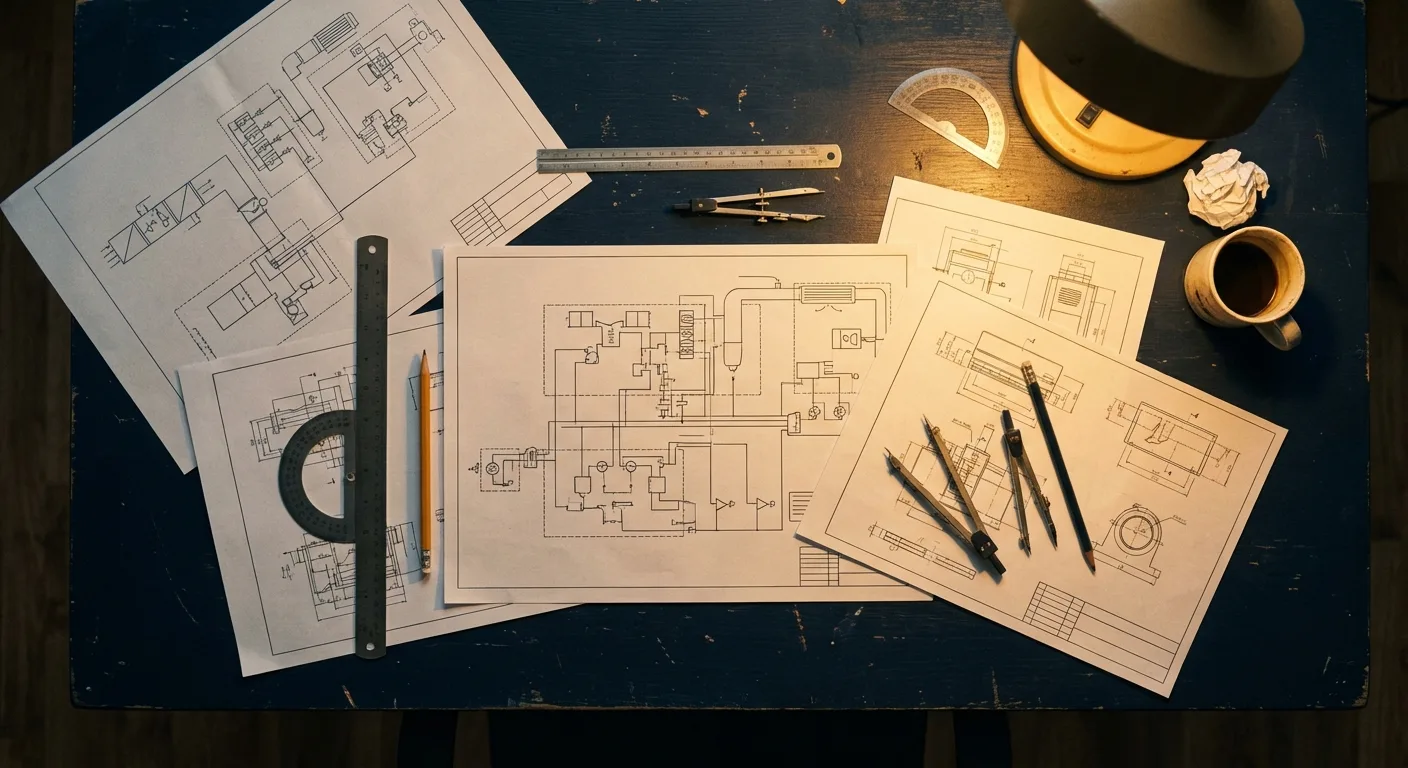
The HVAC system is the respiratory system of a building. An excellent HVAC design must not only satisfy indoor comfort requirements but also achieve the optimal balance among energy efficiency, maintainability, and service life. Based on ASHRAE international standards and nearly half a century of engineering experience, our team provides comprehensive HVAC system design services for every building — from initial planning through commissioning.
Design Process
- Requirements Interview & Site Survey — Understand building usage, occupancy characteristics, operating hours, and owner requirements. Conduct on-site environmental surveys to assess building orientation, envelope properties, and surrounding conditions.
- HVAC Load Calculation — Perform hourly load calculations using the RTS (Radiant Time Series) method or HBM (Heat Balance Method) as described in ASHRAE Handbook—Fundamentals[1], accounting for building envelope heat transfer, internal heat gains, outdoor air loads, and safety margins.
- System Option Comparison — Conduct technical and economic comparative analysis of all-air, all-water, air-water hybrid, and VRF (Variable Refrigerant Flow) system types to recommend the optimal solution.
- Equipment Selection & Specification — Based on calculation results, select specifications for chillers, cooling towers, air handling units, fan coil units, and other equipment, ensuring capacity and efficiency meet ASHRAE 90.1 minimum energy performance requirements[2].
- Design Documentation & Permit Submission — Complete HVAC floor plans, system diagrams, equipment schedules, construction specifications, and other design documents. Handle professional engineer certification and related permit submissions.
- Construction Supervision & Commissioning — Conduct quality inspections and technical coordination during construction. Upon completion, perform TAB (Testing, Adjusting and Balancing) testing to ensure system performance meets design requirements[3].
Technical Standards & Specifications
Our design work adheres to the following international standards and specifications, ensuring engineering quality and professional excellence:
- ASHRAE Standard 90.1 — Building energy efficiency standard that defines minimum energy performance requirements for HVAC systems, covering equipment efficiency, pipe insulation, control strategies, and more[2].
- ASHRAE Standard 62.1 — Ventilation and indoor air quality standard for commercial buildings, specifying minimum outdoor air quantities and ventilation effectiveness[4].
- ASHRAE Standard 55 — Thermal comfort conditions standard that defines acceptable ranges for indoor temperature, humidity, and air velocity[5].
- ASHRAE Guideline 36 — High-performance sequences of operation guideline that provides standardized design methods for HVAC automatic control systems[6].
Core Design Considerations
Accuracy of Load Calculations
HVAC load calculation is the foundation of the entire design. Excessive design margins lead to oversized equipment capacity, increased initial costs, and poor efficiency when the system operates under low-load conditions for extended periods. Conversely, undersizing fails to meet peak demand. ASHRAE Handbook—Fundamentals recommends hourly load calculation methods that account for building thermal storage effects and the varying usage schedules of different spaces[1], yielding optimal design capacity.
Outdoor Air Treatment & Indoor Air Quality
Under the Ventilation Rate Procedure of ASHRAE 62.1, outdoor air quantity calculations must consider both occupant density and floor area[4]. In Taiwan's hot and humid climate, dehumidification of outdoor air often accounts for 20% to 30% of total HVAC load. Effectively managing the latent heat load from outdoor air is a critical design challenge.
System Zoning & Control Strategies
Proper HVAC zoning is the first step toward energy savings. By zoning according to each space's usage schedule, load characteristics, and temperature/humidity requirements, combined with the high-performance control sequences recommended in ASHRAE Guideline 36[6] — such as supply water temperature reset, static pressure reset, and demand-controlled ventilation (DCV) — system operating energy consumption can be significantly reduced.
Our Advantages
The CKY engineering team has been deeply engaged in HVAC design and planning for nearly half a century. Our principal engineer is a licensed Refrigeration and Air Conditioning Professional Engineer who has served as chairman of the Kaohsiung HVAC Engineers Association and is frequently appointed as an expert reviewer for government procurement projects. From hospitals and commercial office buildings to high-tech manufacturing facilities, we have accumulated design experience across more than a hundred project sites. We do not over-design — we deliver the right design, grounded in rigorous engineering calculations, finding the most suitable HVAC solution for every building.
Common Application Scenarios
Commercial Office Buildings & Shopping Malls
HVAC systems for commercial buildings must simultaneously satisfy the comfort needs of large occupant populations and accommodate diverse spatial functions. Using the Ventilation Rate Procedure from ASHRAE Standard 62.1, we precisely calculate the required fresh air volume for each zone and incorporate Variable Air Volume (VAV) system design, maximizing energy savings while maintaining indoor air quality. For shopping mall atriums with high ceilings, we employ airflow stratification design strategies, conditioning only the occupied zone to effectively reduce cooling loads.
Industrial Facilities
HVAC design for manufacturing facilities must address multiple factors including process heat generation, dust control, ventilation requirements, and occupant comfort. Using the design methods from the industrial HVAC chapter of the ASHRAE Handbook—HVAC Applications, we plan independent temperature and humidity control zones for different process requirements and integrate local exhaust with general ventilation systems to ensure the production environment meets quality control standards.
Healthcare & Educational Institutions
HVAC systems for hospitals, schools, and other public institutions require not only high reliability but also compliance with stringent regulatory requirements. Pressure differentials, air change rates, and air filtration levels for healthcare spaces must be designed in accordance with ASHRAE Standard 170. Educational institutions focus on classroom CO2 concentration control and noise level management, creating an environment conducive to learning.
Design Tools & Methods
We employ industry-recognized professional tools for HVAC system design and analysis. Cooling load calculations follow the RTS (Radiant Time Series) method or CLTD/CLF method described in the ASHRAE Handbook—Fundamentals, supported by professional load calculation software for precise computation. Duct and piping systems are sized using the Equal Friction Method or Static Regain Method, ensuring proper pressure balance and energy efficiency throughout the system.