Carbon dioxide (CO2, refrigerant designation R-744) is one of the earliest refrigerants used by humanity, having been widely applied in marine refrigeration and the food industry since the late 19th century. However, with the invention and widespread adoption of synthetic refrigerants (CFC, HCFC, HFC), CO2 was gradually phased out in the mid-20th century. Now, under increasingly stringent Global Warming Potential (GWP) regulations, CO2 is making a powerful comeback in commercial refrigeration and cold chain applications through transcritical cycle technology, leveraging its absolute environmental advantages of GWP=1, ODP=0, non-flammability, and non-toxicity[1]. This article systematically analyzes the thermodynamic principles, system architecture, key component design of CO2 transcritical refrigeration systems from an engineering perspective, as well as their suitability and engineering countermeasures under subtropical climate conditions.
1. Why Is CO2 Once Again a Refrigerant Option?
The history of CO2 as a refrigerant dates back to 1866, when American Thaddeus Lowe first applied it to ice-making systems. From the 1890s to the 1930s, CO2 refrigeration systems held an important position in marine refrigeration, breweries, and cold storage warehouses. However, the invention of CFC refrigerants in the 1930s, with their low-pressure, stable, and non-flammable operational advantages, quickly replaced CO2 -- whose high operating pressure was considered a disadvantage in terms of equipment cost and safety at the time[2].
Eighty years later, the evolution of environmental regulations has fundamentally changed the criteria for refrigerant selection. The global advancement of the Kigali Amendment to the Montreal Protocol, combined with the EU F-Gas Regulation 2024 revision (Regulation (EU) 2024/573) significantly tightening HFC quotas, means that traditional commercial refrigeration refrigerants such as R-404A (GWP 3,922) and R-507A (GWP 3,985) face accelerated phase-out[3]. Against this backdrop, the environmental characteristics of CO2 become unmatched:
- GWP = 1: The lowest global warming potential among all refrigerants, serving as the calculation baseline for GWP itself
- ODP = 0: Does not deplete the ozone layer
- ASHRAE 34 Safety Classification A1: Low toxicity, non-flammable -- the only refrigerant that simultaneously possesses zero environmental impact and A1 safety class
- Widely Available: CO2 is an industrial byproduct, with abundant supply, low cost, and no quota restrictions
The European supermarket industry pioneered the commercialization of CO2 transcritical systems. According to Shecco's market survey report, by the end of 2025, over 50,000 CO2 transcritical refrigeration systems had been installed across Europe, widely deployed in chains such as Carrefour, Tesco, ALDI, and Lidl[4]. This figure represents nearly a threefold increase over five years ago, fully demonstrating the commercial maturity of CO2 transcritical technology.
2. Thermodynamic Properties of CO2 and the Transcritical Cycle
Understanding CO2 transcritical refrigeration systems requires starting from its unique thermodynamic properties. CO2 has a critical temperature of 31.1 degrees C and a critical pressure of 73.8 bar -- these two values are key to understanding the entire system design logic[5].
Subcritical and Transcritical Cycles
The critical temperatures of conventional refrigerants (such as R-134a, R-404A) are far above typical ambient temperatures (R-134a critical temperature is 101.1 degrees C), so the high-pressure side of the refrigeration cycle always operates in the subcritical saturation region -- the condenser releases latent heat at constant temperature and pressure, completing the phase change from gas to liquid. This is the subcritical cycle.
The situation with CO2 is fundamentally different. When ambient temperature exceeds approximately 25 degrees C, the condensation temperature approaches or exceeds the critical temperature of 31.1 degrees C. At this point, the CO2 on the high-pressure side cannot undergo traditional gas-liquid phase-change condensation -- it exists in a supercritical state, a supercritical fluid with density between that of gas and liquid. In this transcritical cycle, the high-pressure side heat exchanger is no longer a condenser but is called a gas cooler, where CO2 rejects heat in a sensible heat manner (temperature continuously decreasing without phase change)[5].
Engineering Significance of High-Pressure Side Operating Pressure
In the transcritical cycle, the gas cooler outlet CO2 temperature and pressure are no longer coupled (unlike the subcritical cycle where condensation pressure is uniquely determined by condensation temperature). Engineers can adjust the high-pressure side pressure through high-pressure valve or compressor control to achieve optimal COP at a specific ambient temperature. Typical transcritical operating pressure ranges from 80-120 bar[6] -- this means all high-pressure side piping, valves, fittings, and pressure vessels must use components specifically designed for high pressure, with design pressures typically reaching 130-140 bar.
Relationship Between COP and Ambient Temperature
The COP of the CO2 transcritical cycle is highly sensitive to ambient temperature. At ambient temperatures below 25 degrees C, the system can operate in subcritical mode, with COP performance comparable to or even better than conventional refrigerant systems. However, when ambient temperature rises above 35 degrees C, the transcritical cycle COP drops significantly because the gas cooler outlet temperature is limited by ambient temperature, increasing expansion losses on the high-pressure side[7]. This characteristic makes high-temperature climates the greatest engineering challenge for CO2 transcritical systems, a topic that will be discussed in depth later in this article.
3. CO2 Refrigeration System Architecture and Key Components
Modern CO2 transcritical refrigeration systems have evolved into multiple mature system architectures to address different application requirements and climate conditions.
Booster System: Medium-Temperature + Low-Temperature Two-Stage Compression
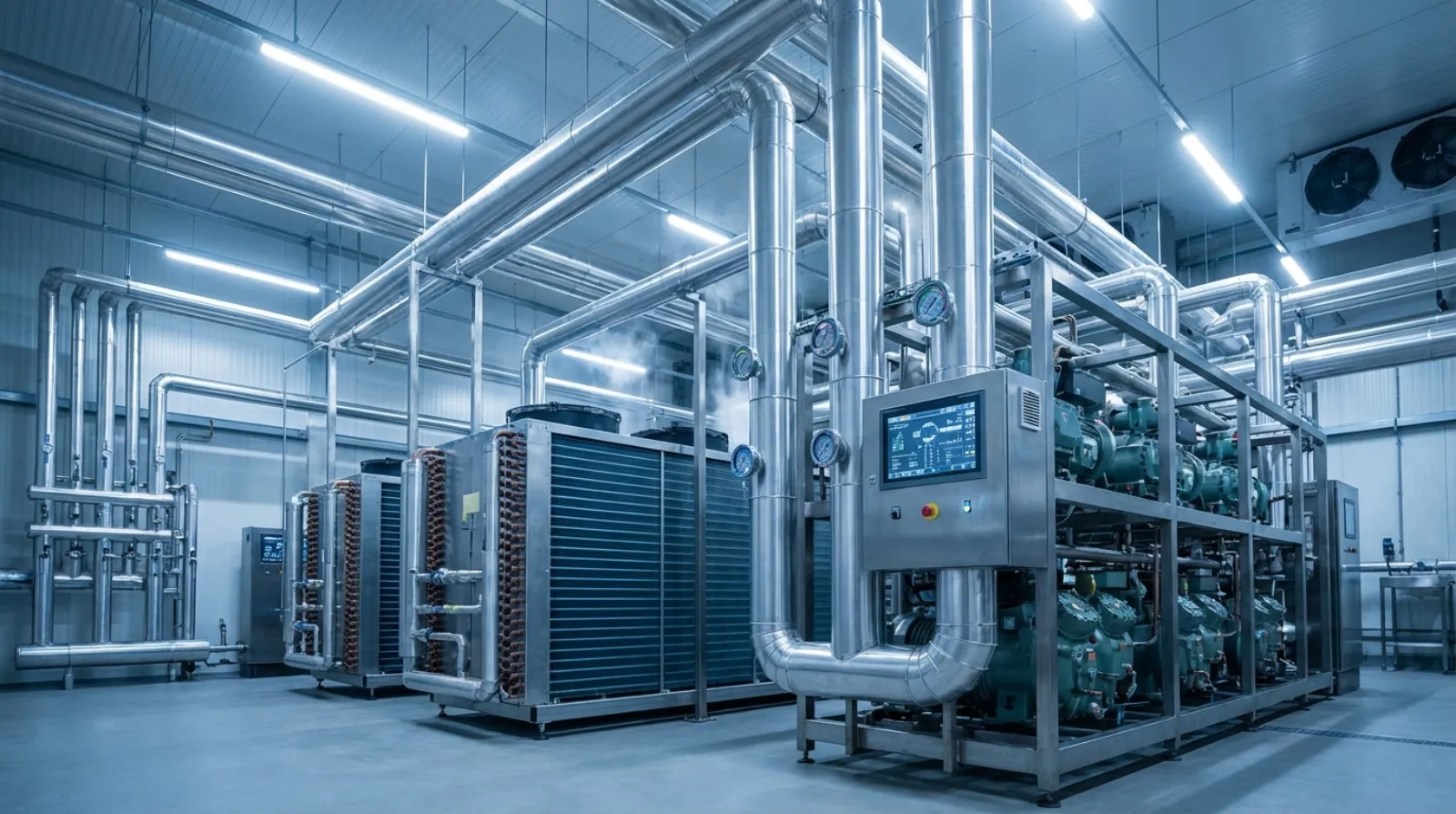
The Booster system is the foundational architecture for commercial supermarket CO2 refrigeration systems. The system includes two sets of compressors: low-temperature compressors (LT Compressor) serving -35 to -30 degrees C frozen display cases, and medium-temperature compressors (MT Compressor) serving -10 to -5 degrees C refrigerated display cases[6]. The low-temperature compressor discharge merges into the medium-temperature suction side, then the medium-temperature compressor raises it to gas cooler pressure. A flash tank or intercooler is installed at the medium-pressure stage to separate flash gas and subcool the liquid refrigerant.
Parallel Compression
At high ambient temperatures, the amount of flash gas generated in the flash tank increases significantly. If all this medium-pressure flash gas is directed back to the medium-temperature compressor suction side, it reduces overall system efficiency. Parallel compression technology adds a dedicated set of compressors to the Booster architecture that directly draws medium-pressure gas from the flash tank and compresses it to gas cooler pressure, avoiding unnecessary throttling losses. Research shows that parallel compression can improve system COP by 10%-20% at high ambient temperatures[7].
Ejector / Expander
In the transcritical cycle, the expansion process from gas cooler outlet to evaporator inlet involves enormous pressure differentials (up to 40-80 bar), and throttling with conventional expansion valves causes substantial thermodynamic irreversibility losses. Ejector or expander technology can partially recover this expansion work, converting it into compression work or kinetic energy to improve cycle efficiency[8].
- Multi-Ejector: Uses the kinetic energy of high-pressure CO2 to entrain gas from the low-pressure evaporator outlet, raising compressor suction pressure and reducing compression work. Danfoss multi-ejector modules have been widely commercialized in European supermarkets, improving system COP by 15%-25%
- Expander Turbine: Directly recovers expansion work as shaft power to drive compressors or generators, offering higher theoretical efficiency but also higher mechanical complexity -- currently still in the research and testing phase
Gas Cooler Design
The gas cooler is the key component in CO2 transcritical systems replacing the traditional condenser. Since high-pressure side pressure can reach 80-120 bar, gas cooler piping and fin designs must withstand pressure levels far exceeding those of conventional refrigeration systems. Common designs use small-diameter microchannel heat exchangers, leveraging smaller tube diameters to withstand high pressure while providing excellent heat transfer efficiency and compact volume[6].
In high-temperature climate regions, evaporative gas coolers use water spray evaporation on the gas cooler surface to lower intake air temperature, effectively reducing the gas cooler outlet CO2 temperature by 5-8 degrees C and significantly improving transcritical operation COP. This technology is particularly important for CO2 system design in subtropical regions.
High-Pressure Safety Design
The high operating pressures of CO2 systems require rigorous safety design. All high-pressure side components must comply with pressure vessel regulations (such as PED, ASME) and be equipped with relief valves and rupture discs for overpressure protection. When the system shuts down, CO2 pressure continues to rise with ambient temperature -- in a sealed system, the saturated CO2 pressure at 40 degrees C ambient temperature is approximately 100 bar. Therefore, system design must consider pressure management strategies during shutdown periods[5].
Evaluating the feasibility of a CO2 refrigeration system? Contact our engineering team for an engineering assessment tailored to your refrigeration requirements.
4. Commercial Refrigeration Applications: Supermarkets and Distribution Centers
Commercial supermarkets are the most mature and largest-scale application field for CO2 transcritical refrigeration systems. A medium-sized supermarket's refrigeration system typically encompasses dozens of display cases and several cold storage rooms, with total refrigeration capacity ranging from tens to hundreds of kW.
Integrated Refrigeration and Cold Storage Systems
One of the greatest advantages of the CO2 Booster system is serving both medium-temperature (refrigeration) and low-temperature (freezing) loads with a single refrigerant, replacing the traditional supermarket dual-system architecture that separately uses R-404A for freezing and R-134a for refrigeration. The integrated design not only simplifies piping configuration and refrigerant management but also reduces initial investment and maintenance costs by eliminating one condenser and associated equipment[4].
Display Case Direct Expansion vs. Indirect Systems
CO2 systems can be paired with display cases in two configurations: Direct Expansion (DX) and Indirect (Secondary Loop) systems. DX systems deliver CO2 directly to display case evaporators, offering high heat transfer efficiency but extending the piping system into the retail area. Indirect systems use CO2 to cool a secondary coolant (such as glycol solution), which then circulates to the display cases. DX systems are more common in Europe, while in Asian markets, some operators prefer indirect systems as a transitional approach, considering piping length and high-pressure safety concerns.
Heat Recovery Utilization
The gas cooler outlet CO2 temperature in transcritical cycles can reach 80-100 degrees C, containing substantial high-grade recoverable waste heat. European supermarkets commonly use this waste heat for winter store heating and domestic hot water, achieving integrated energy utilization. In cold climate regions, the economic benefits of heat recovery can significantly shorten the system's return on investment[4]. Even in subtropical environments, supermarket domestic hot water demands (cleaning water, employee facilities) can serve as a year-round heat recovery application scenario.
TEWI Comparison
TEWI (Total Equivalent Warming Impact) is a comprehensive indicator for evaluating the environmental impact of refrigeration systems, simultaneously considering direct refrigerant emissions (leakage) and indirect emissions (energy consumption). Multiple European field studies show that CO2 Booster system TEWI is 20%-40% lower than R-404A systems[3]. Under the same refrigerant leakage rate assumptions, the direct emission impact of CO2 is virtually negligible (GWP=1 vs. GWP=3,922), while indirect emission differences depend on climate conditions and system design quality.
5. Cold Chain and Industrial Refrigeration Applications
CO2 applications have expanded from supermarket refrigeration to broader cold chain and industrial refrigeration domains.
CO2 System Design for Large Cold Storage Facilities
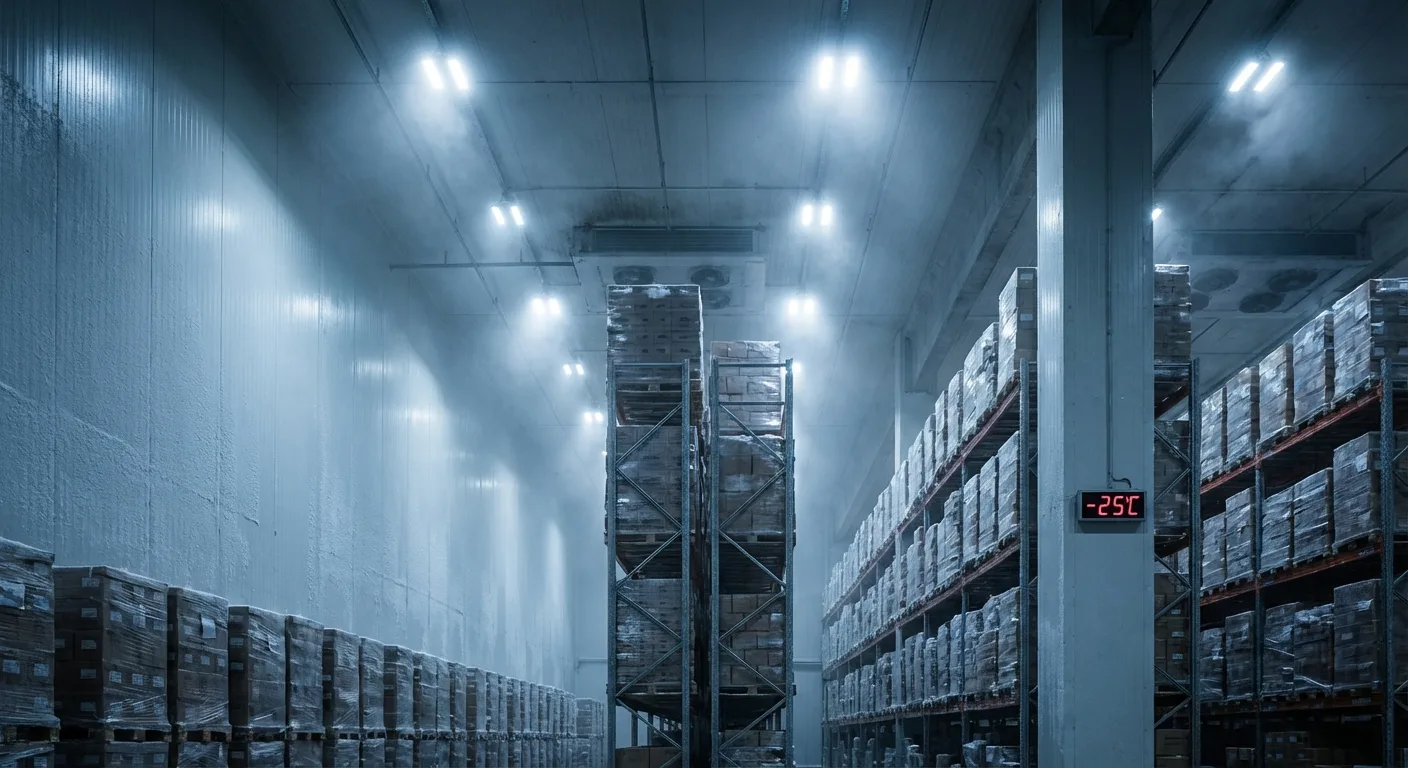
For large cold storage facilities at -25 to -40 degrees C, CO2 can serve as the low-temperature stage refrigerant, leveraging its excellent volumetric refrigerating capacity to provide efficient low-temperature cooling. The volumetric refrigerating capacity of CO2 at -30 degrees C evaporation temperature is approximately 5-8 times that of R-404A, meaning smaller-diameter piping, more compact evaporators, and lower refrigerant charge[5].
CO2/NH3 Cascade Systems
The CO2/NH3 cascade system is a technology focus in large-scale industrial refrigeration. The system uses NH3 (R-717) as the high-temperature stage refrigerant to drive the condenser, and CO2 as the low-temperature stage refrigerant serving the cold storage evaporator, with heat exchange between the two through a cascade heat exchanger[2]. This architecture combines the energy efficiency advantages of NH3 at the high-temperature stage with the volumetric efficiency advantages of CO2 at the low-temperature stage, while restricting NH3 use to the machine room area, reducing NH3 charge and leakage risk. Large logistics cold storage facilities in Europe have widely adopted this architecture.
Prospects for CO2 Applications in Cold Chain Logistics
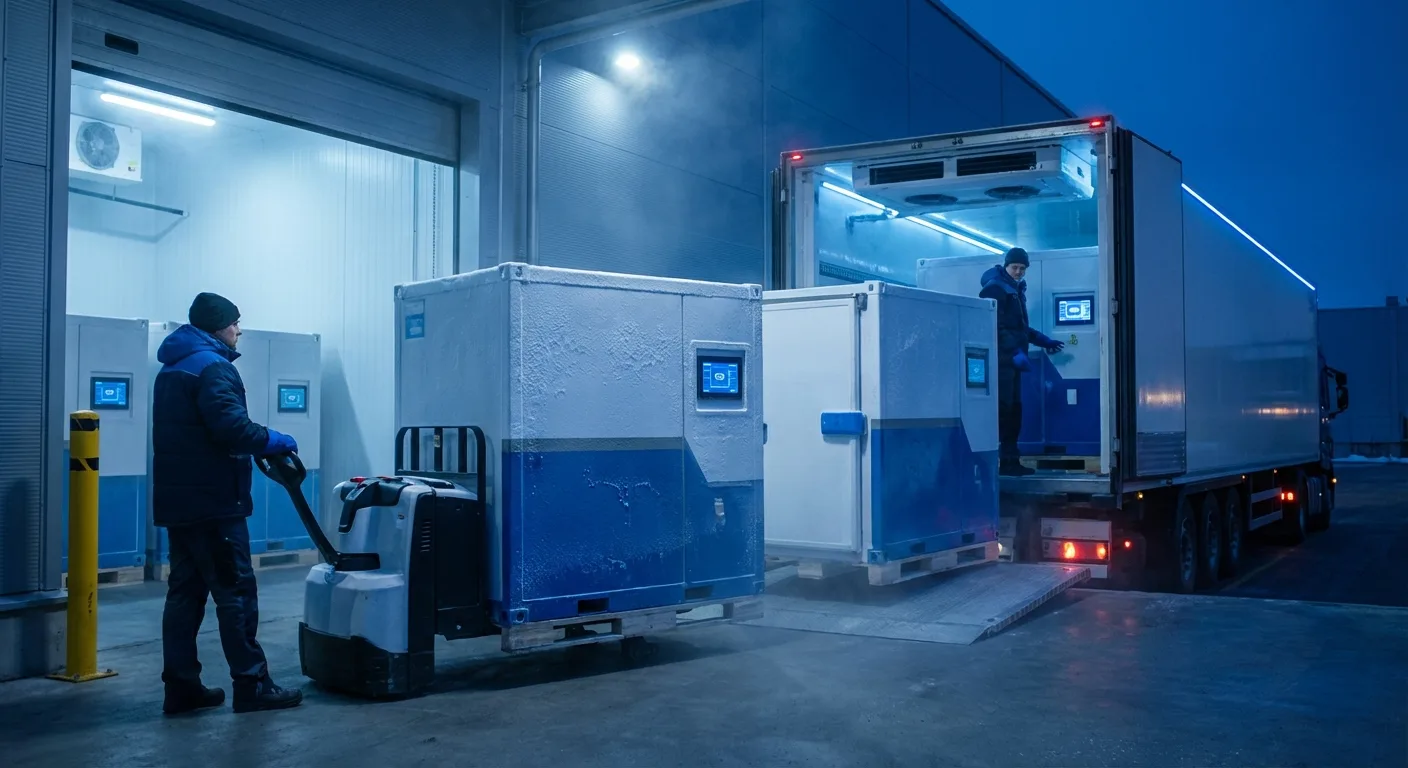
In cold chain logistics, CO2 applications are extending from stationary refrigeration equipment to transport refrigeration. CO2 refrigerated transport vehicles utilize the latent heat of evaporation of liquid CO2 to provide cooling, offering advantages such as rapid temperature reduction, no mechanical vibration, and low noise. Additionally, liquid CO2 as a thermal storage medium shows development potential for rapid charging and cold release applications at cold chain relay stations[9].
CO2 Applications in Ice-Making Systems
CO2 has unique advantages in the ice-making field. Its high volumetric refrigerating capacity allows ice-making system piping and heat exchangers to be significantly downsized, while CO2's excellent heat transfer properties (high liquid density, low viscosity, high thermal conductivity) further improve ice-making efficiency. In fishing ports, seafood processing plants, and other scenarios requiring large quantities of crushed or flake ice, CO2 ice-making systems are gradually replacing traditional R-22 and R-404A systems.
6. Suitability for Subtropical Climates and Engineering Countermeasures
The greatest challenge for CO2 transcritical systems in subtropical applications is undoubtedly high ambient temperature. Summer daytime outdoor temperatures (June-September) frequently reach 33-36 degrees C, with southern regions potentially exceeding 37 degrees C. When ambient temperature far exceeds the CO2 critical temperature of 31.1 degrees C, the transcritical cycle COP is significantly lower than subcritical mode[7].
Impact of High Ambient Temperature on Efficiency
Taking a typical supermarket CO2 Booster system as an example, the system COP at 25 degrees C ambient temperature is approximately 2.8-3.2; when ambient temperature rises to 35 degrees C, COP may drop to 2.0-2.4, a decrease of approximately 25%-30%[10]. This efficiency loss primarily stems from increased expansion losses due to higher gas cooler outlet temperatures and increased compressor power consumption. Compared to an R-404A system COP of 2.5-3.0 under equivalent conditions, the energy efficiency disadvantage of CO2 under high-temperature conditions cannot be ignored.
Adiabatic Evaporative Cooling
Adiabatic evaporative cooling is one of the most effective means of improving CO2 system performance in high-temperature environments. Installing wet pads or spray systems on the gas cooler intake side uses water evaporation to lower intake air temperature by 5-10 degrees C. For typical summer conditions of 35 degrees C / 70% RH in subtropical regions, adiabatic cooling can reduce intake air temperature to approximately 28-30 degrees C, bringing the system close to subcritical operation, with COP recovering 15%-25%[10]. Adiabatic cooling water consumption is relatively limited, and it can still achieve considerable cooling effects even in high-humidity environments.
Thermal Energy Storage and Nighttime Operation Strategies
Although the day-night temperature differential in subtropical regions is less pronounced than in temperate areas, nighttime summer temperatures are still 5-8 degrees C lower than daytime. Through Thermal Energy Storage (TES) systems, storing cold during nighttime hours with lower ambient temperatures and lower electricity rates, then releasing stored cold during the day to supplement system cooling capacity, can simultaneously improve system annual average COP and reduce peak demand electricity charges. Ice storage or CO2 liquid thermal storage (using CO2 itself as the storage medium) are viable technical options.
Current Market Status and Future Outlook
As of 2026, the number of CO2 transcritical refrigeration system installations in Taiwan remains quite limited, primarily concentrated in trial deployments by a few international supermarket chains and new construction projects by some forward-thinking frozen food companies. Key market development barriers include: insufficient domestic engineering teams with CO2 high-pressure system design and construction experience, an incompletely established supply chain for high-pressure components, and industry concerns about system efficiency under high ambient temperatures.
However, in the long term, as HFC quotas continue to tighten causing R-404A and similar refrigerant prices to rise, CO2 system component costs (especially multi-ejectors and parallel compression modules) continue to decline, and carbon fee collection and ESG reporting requirements drive companies to reduce supply chain carbon emissions, the economic viability of CO2 transcritical systems in Taiwan will steadily improve. For building owners planning new large cold storage facilities or supermarket refrigeration systems, CO2 systems should already be included as an option in feasibility assessments.
Conclusion
CO2 transcritical refrigeration systems represent the development direction of refrigeration engineering driven by both environmental regulatory pressure and technological innovation. From the mature commercial operating experience of over 50,000 units in Europe, the reliability of the technology itself is beyond question. The real engineering challenge lies in how to control the efficiency disadvantage of subtropical climates to an acceptable range through system architecture optimization (parallel compression, multi-ejectors), enhanced gas cooler design (evaporative cooling), and operational strategy adjustments (thermal storage, nighttime operation). As refrigeration and air conditioning engineers, we have a responsibility to replace wait-and-see attitudes with solid engineering analysis amid the refrigerant transition wave, providing building owners with refrigeration system solutions that look ahead for the next twenty years.