Cold Storage is one of the most demanding application domains in refrigeration and air conditioning engineering in terms of system reliability and energy efficiency requirements. From blast freezing tunnels in food processing plants to ultra-low temperature cold storage for pharmaceutical logistics, different usage requirements correspond to fundamentally different design parameters and equipment configurations. This article systematically analyzes the core considerations in cold storage design from a practicing engineer's perspective.
1. Cold Storage Temperature Classification and Application Scenarios
Cold storage facilities are classified into multiple grades based on storage temperature, with different temperature ranges corresponding to different refrigerant system architectures and equipment selection[1]:
- Refrigerated Storage (0 degrees C to 10 degrees C): Short-term preservation of fruits, vegetables, dairy products, and beverages; achievable with single-stage compression
- Frozen Storage (-18 degrees C to -25 degrees C): Long-term storage of frozen foods, meeting HACCP and food safety regulatory requirements
- Ultra-Low Temperature Storage (-35 degrees C to -60 degrees C): Blast freezing of deep-sea catches, preservation of pharmaceutical and biotech samples; typically requires two-stage compression or cascade systems
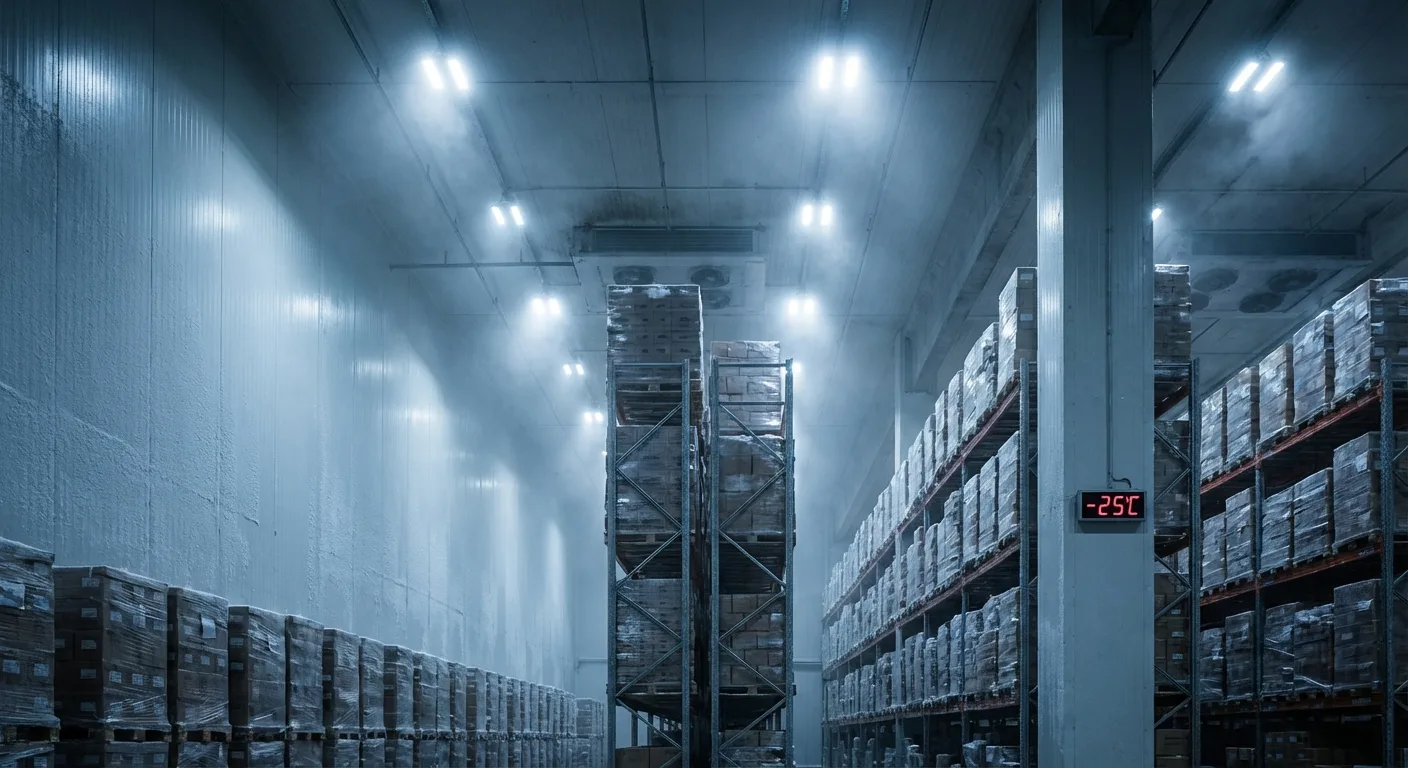
Taking the most common -25 degrees C frozen storage in Taiwan's food industry as an example, the temperature difference between inside and outside the facility can exceed 60 degrees C. Such an enormous temperature differential makes building envelope insulation, floor frost protection, and thermal bridge control critical factors for design success[2].
2. Refrigeration Load Calculation
Precise calculation of refrigeration load is the foundation for equipment selection. According to the ASHRAE Handbook — Refrigeration[3], the total refrigeration load of a cold storage facility consists of the following major components:
- Transmission Load: Heat entering through the storage walls, ceiling, and floor, directly related to the indoor-outdoor temperature difference and the thermal resistance (R-value) of the insulation materials
- Product Load: Sensible and latent heat that must be removed to reduce goods from their entry temperature to the storage temperature, accounting for respiration heat (fruits and vegetables) and latent heat of freezing
- Internal Load: Heat generated by lighting, personnel, forklifts, and other internal sources
- Infiltration Load: Heat and moisture introduced by warm, humid outside air entering the facility during door-opening operations
- Defrost Load: Heat injected into the storage space during evaporator defrost cycles
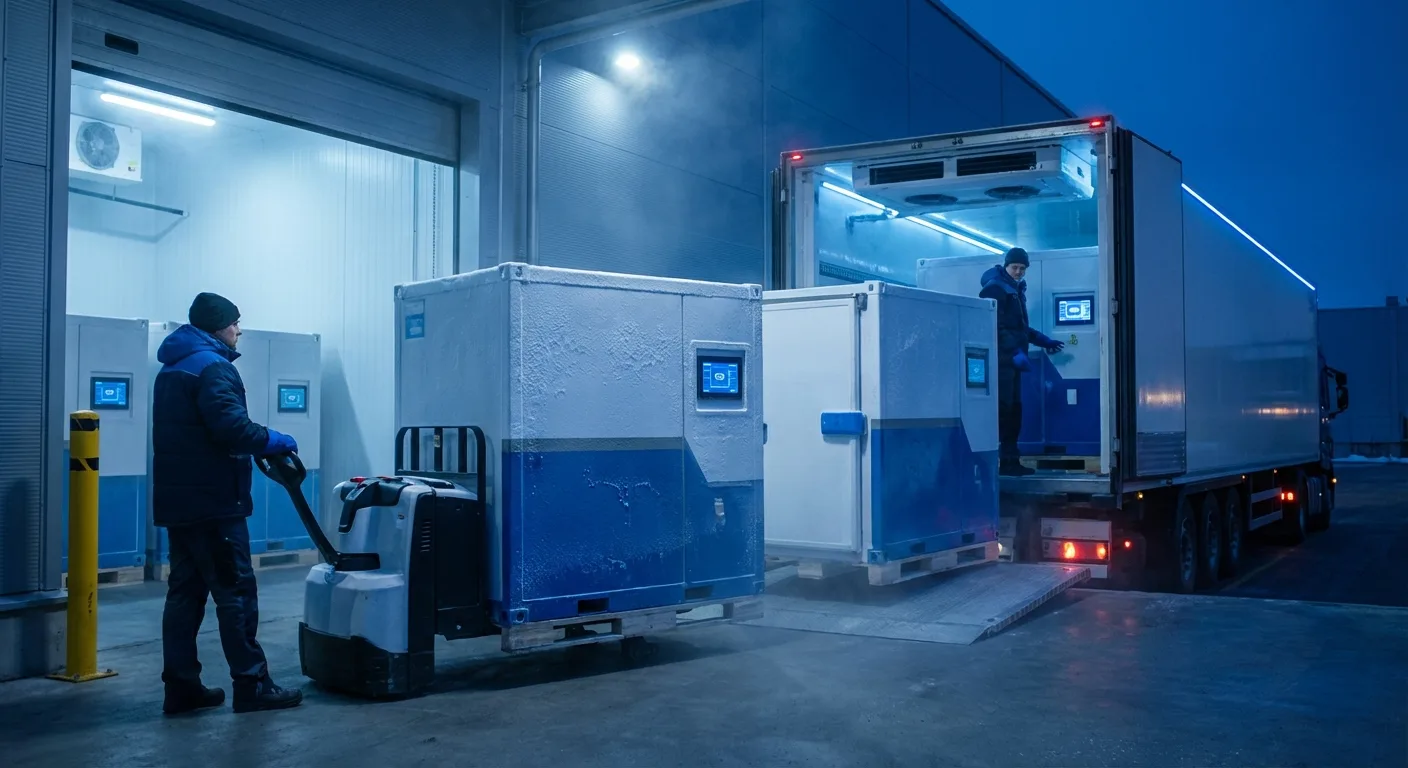
In practice, infiltration load is often the most underestimated component. In a large logistics cold storage facility with frequent loading and unloading, infiltration load can account for 15% to 30% of the total load[4]. High-speed roll-up doors, air curtains, and anterooms are effective measures for reducing infiltration load.
3. Refrigeration System Architecture and Equipment Selection
Compressor Selection
Compressor selection for cold storage depends on evaporating temperature and refrigeration capacity requirements. For -25 degrees C cold storage, the evaporating temperature is typically set at -30 degrees C to -35 degrees C, and screw compressors are the mainstream choice for this temperature range, as their volumetric efficiency at low pressure ratios exceeds that of reciprocating compressors[5].
For ultra-low temperature applications below -40 degrees C, excessively high compression ratios cause discharge temperatures to rise too high and volumetric efficiency to drop sharply, requiring Two-stage Compression or Cascade Systems. Cascade systems using R-404A or R-507A as the high-temperature stage refrigerant and CO2 as the low-temperature stage refrigerant have become increasingly prevalent in recent years due to tightening environmental regulations[6].
Evaporator Design
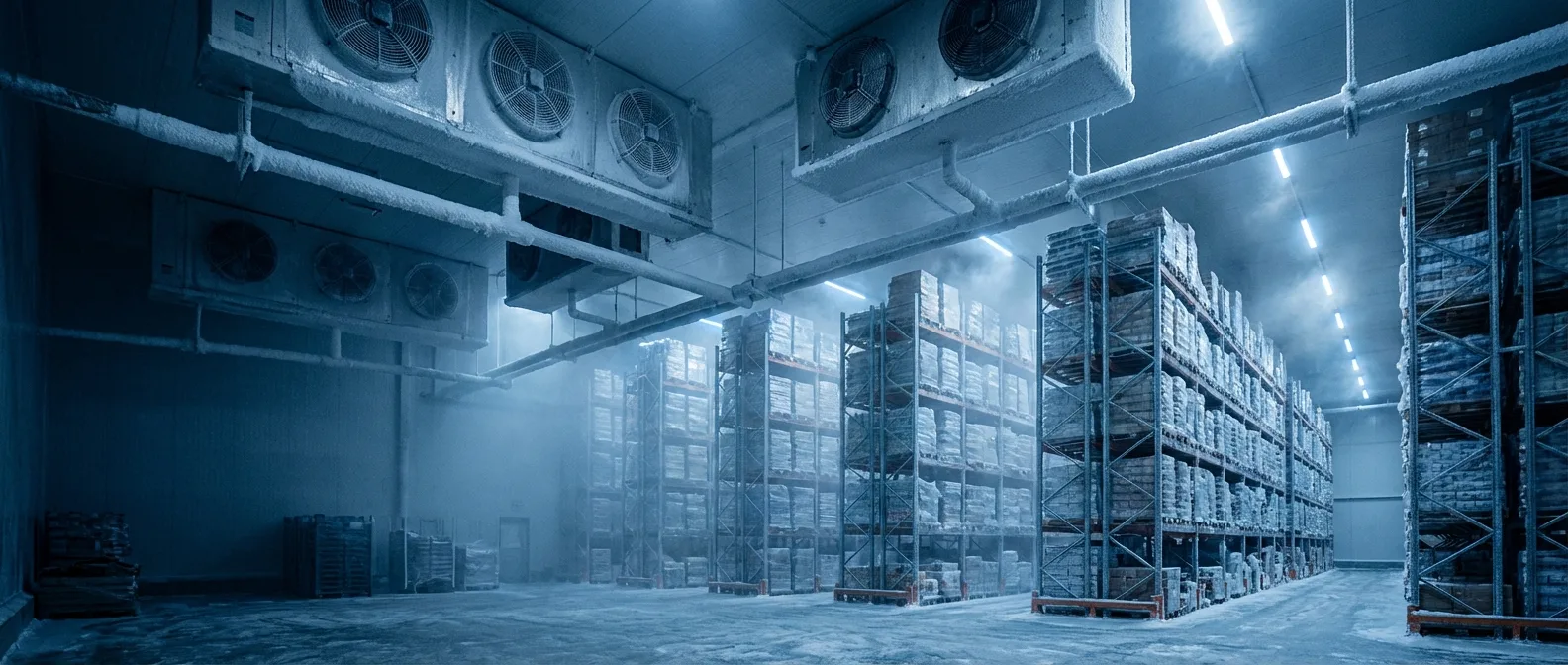
Cold storage evaporators primarily use unit coolers, with design focus areas including: fin spacing (typically 8--12 mm for low-temperature storage to slow frost accumulation), matching airflow volume with throw distance, and defrost method selection. Electric defrost is the most common method, but the heat injected into the storage space during defrost is not negligible -- defrost load in large cold storage facilities can account for 5% to 10% of the total load[7].
Hot Gas Defrost routes compressor discharge gas directly into the evaporator coil, providing faster defrost with less impact on storage temperature, making it an advanced option for large cold storage facilities. However, the complexity of system piping design and control logic increases significantly.
4. Building Envelope Insulation and Structural Design
Building envelope insulation is fundamental to controlling transmission load. Modern cold storage facilities commonly use polyurethane (PUR/PIR) sandwich panels as the building envelope material, with thermal conductivity of approximately 0.022--0.028 W/(m K)[8].
Insulation panel thickness selection must consider cost-effectiveness -- increasing panel thickness reduces transmission load and operating electricity costs but increases initial construction costs. For a -25 degrees C cold storage facility, common design specifications in Taiwan are 150--200 mm for wall panels, 200 mm for ceiling panels, and 150--200 mm for floor insulation.
Floor frost protection is the most easily overlooked yet consequentially serious aspect of cold storage design. When the floor temperature drops below 0 degrees C, moisture in the foundation soil freezes and expands (Frost Heave), causing floor uplift, deformation, and even structural damage[9]. Anti-frost measures include:
- Floor Heating: Embedding electric heating cables or hot water pipes beneath the insulation layer
- Ventilated Floor: Using natural or forced ventilation beneath a raised floor
5. Energy Efficiency Strategies and Smart Control
In cold storage power consumption, compressors account for 60% to 70%, evaporator fans account for 15% to 20%, and condensers and other equipment make up the remainder[10]. Major energy efficiency strategies include:
- Variable Frequency Compressors: Adjusting compressor speed based on actual load, avoiding frequent start-stops, with significant energy savings at partial loads
- Evaporative Condensers: Compared to air-cooled condensers, evaporative condensers can reduce condensing temperature by 8--12 degrees C, reducing compressor power consumption by 10--15%
- EC Fans: Using EC motors (Electronically Commutated Motors) for evaporator and condenser fans with variable speed control, saving over 30% compared to traditional AC motors
- Smart Defrost Scheduling: Using evaporator inlet/outlet air temperature differential or pressure differential as defrost trigger criteria (Demand Defrost), replacing fixed-time schedules to reduce unnecessary defrost cycles
Modern cold storage monitoring systems (SCADA/BMS) can integrate multi-dimensional data including temperature, humidity, pressure, and power consumption, combined with trend analysis and anomaly alerts, enabling precise energy management and predictive equipment maintenance[11].
Conclusion
Cold storage engineering is a multidisciplinary field encompassing thermodynamics, fluid mechanics, materials science, and automatic control. From precise load calculation and rational system architecture selection to building envelope insulation and frost protection design and smart energy-efficient control, every aspect is interconnected. With the rapid growth of cold chain logistics and increasingly stringent carbon emission regulations, the challenges facing cold storage engineers will only intensify -- only through systematic thinking, solid engineering fundamentals, and a commitment to continuous learning can these challenges be met.