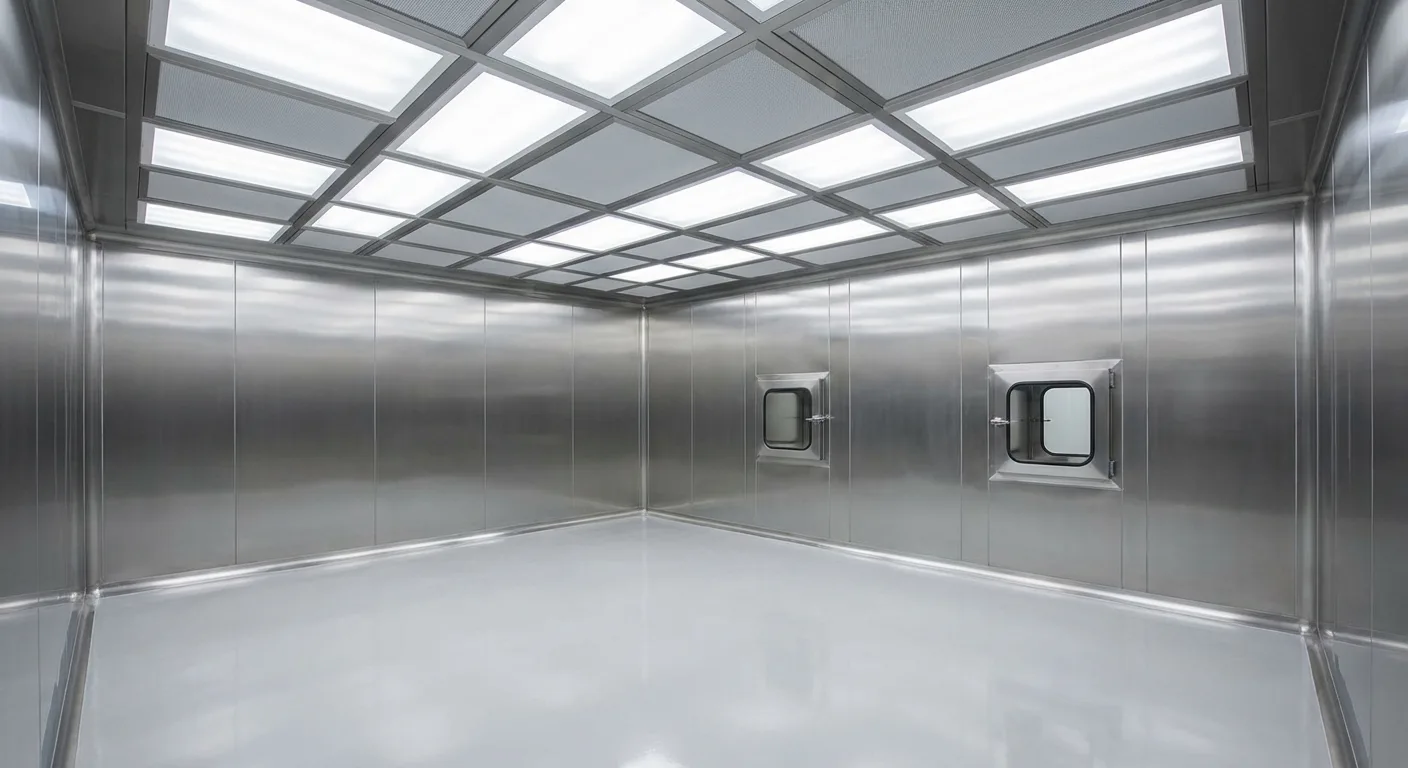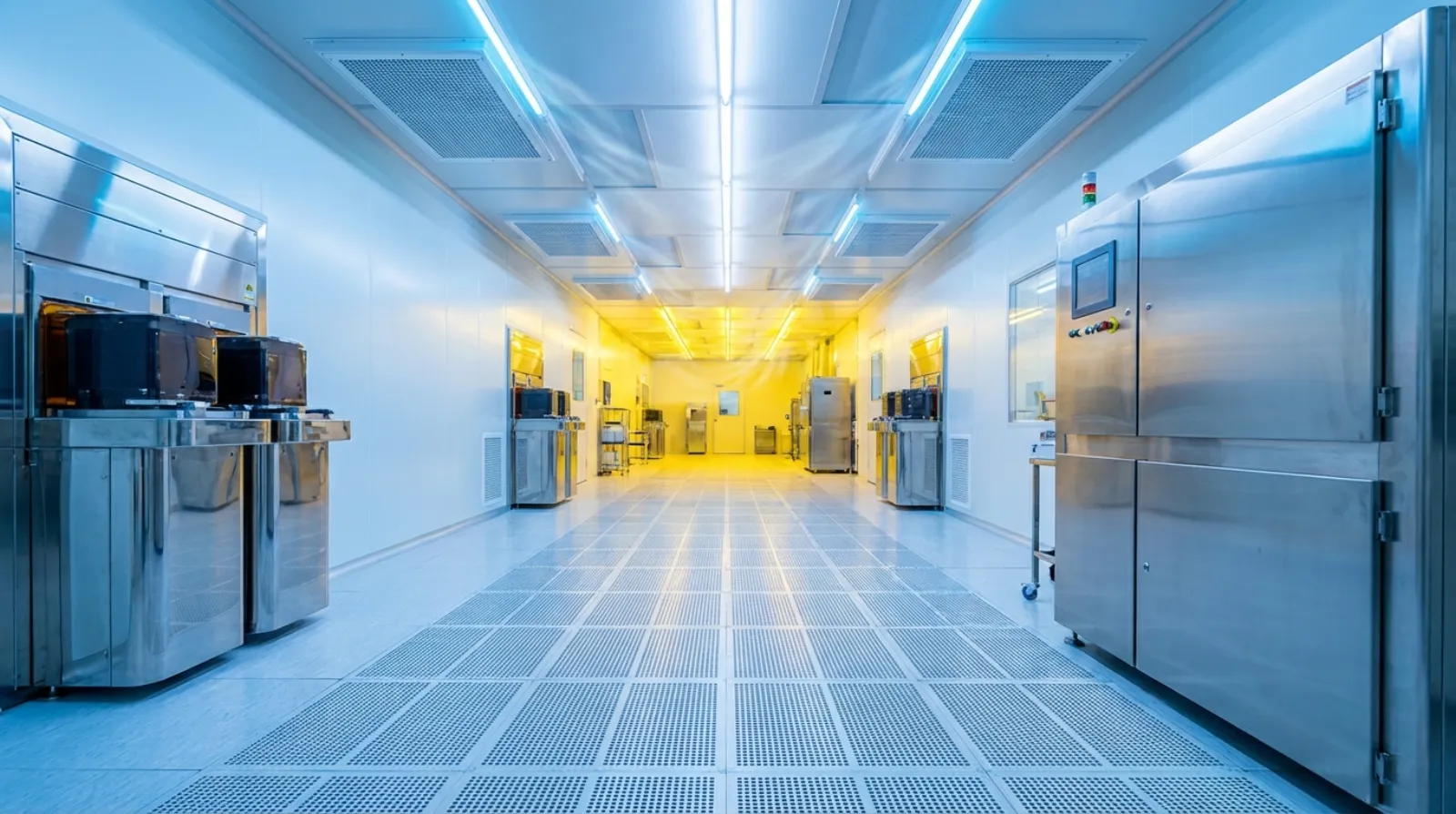
Semiconductor manufacturing is the most demanding industry in human industrial history in terms of environmental control. An advanced 12-inch wafer fab (FAB), with cleanroom areas often reaching tens of thousands of square meters, has HVAC system design that not only concerns cleanliness and temperature/humidity precision but also directly impacts process yield and operational costs. As Taiwan's semiconductor industry continues to expand, the complexity and importance of HVAC engineering design are growing. This article systematically analyzes the six core aspects of semiconductor fab HVAC design from an engineering practice perspective.
1. Extreme Environmental Control Requirements for Semiconductor Processes
From wafer cleaning and thin film deposition to lithography exposure and etching and packaging, every step of the semiconductor process has extremely precise environmental parameter specifications. Understanding these requirements is the first step in HVAC system design.
Cleanliness Classification and Process Correspondence
According to the ISO 14644-1:2015 standard[1], different process areas within semiconductor facilities correspond to different cleanliness classes. Front-End lithography and etching areas typically require ISO Class 1 to ISO Class 3, equivalent to no more than 10 to 1,000 particles larger than 0.1 micrometers per cubic meter of air. Mid-stage processes such as Chemical Mechanical Polishing (CMP) and ion implantation areas are generally set at ISO Class 4 to ISO Class 5, while back-end packaging and testing areas are typically ISO Class 6 to ISO Class 7.
Notably, as process nodes advance to 3 nanometers and below, some EUV (Extreme Ultraviolet) lithography equipment local environments even require ISO Class 1 -- meaning the particle count at the 0.1 micrometer size must not exceed 10 per cubic meter, presenting unprecedented challenges for HVAC system filtration efficiency and airflow control.
Temperature and Humidity Control Precision
In semiconductor processes, the lithography area has the strictest temperature control requirements, with typical specifications of 23 ± 0.1°C, and some advanced processes requiring ± 0.05°C[2]. Relative humidity control is generally 45 ± 2% RH, with lithography areas potentially requiring ± 1% RH. A temperature deviation of 0.1°C can cause lithography overlay accuracy to shift by several nanometers, which in advanced processes is sufficient to cause yield loss.
Excessive humidity causes photoresist materials to absorb moisture, affecting exposure quality, while insufficient humidity increases the risk of Electrostatic Discharge (ESD), damaging the precision circuit structures on wafers. Therefore, precision temperature and humidity control is not merely a comfort issue but directly relates to the return on investments worth billions of dollars in process equipment.
Airborne Molecular Contamination (AMC) Control
Beyond particle contamination, Airborne Molecular Contamination (AMC) control is increasingly important in advanced semiconductor processes. The SEMI F21-1102 standard[3] classifies AMC into four categories: Acids (MA), Bases (MB), Condensables (MC), and Dopants (MD). Advanced processes have reduced AMC tolerance to the ppt (parts per trillion) level, requiring HVAC systems to be equipped with chemical filters for effective interception.
2. Semiconductor Fab HVAC System Architecture (MAU + DCC + FFU)
Semiconductor fab HVAC systems differ from general buildings by employing a three-stage series air supply architecture: Make-up Air Units (MAU), Dry Cooling Coils (DCC), and Fan Filter Units (FFU), each serving specific functions and processing layers. This is a well-established and mature architecture in the industry[4].
Make-up Air Unit (MAU)
The MAU is responsible for processing incoming fresh outdoor air, with core functions including: pre-filtration (G4/F7 grade) to remove coarse particles from the atmosphere, cooling and dehumidification to lower the air dew point temperature, and medium-efficiency filtration (F9 grade). Under southern Taiwan's climate conditions (summer outdoor air temperature 35°C, relative humidity above 85%), the MAU must reduce the outdoor air dew point temperature to approximately 10°C to 12°C to meet the subsequent DCC's precision temperature and humidity control requirements.
The MAU cooling coil design is the energy consumption key of the entire system. For a 12-inch wafer fab with a monthly capacity of 50,000 wafers, the MAU air volume can reach hundreds of cubic meters per second, and the cooling load often exceeds thousands of refrigeration tons. The number of coil rows (typically 6 to 8), fin pitch, and water flow velocity design directly affect dehumidification efficiency and pressure drop performance.
Dry Cooling Coil (DCC)
The DCC is located in the cleanroom return air path, responsible for removing the sensible heat load generated by process equipment in the cleanroom. The key design point is that the coil surface temperature must be above the return air dew point temperature to ensure no condensation occurs (hence "dry"). Typical DCC supply water temperature is 15°C to 18°C, with temperature control through precision water flow control valves paired with DDC (Direct Digital Controllers).
DCC layout strategy directly affects temperature uniformity. In large-area cleanrooms, DCCs are typically configured in zones, with each zone independently controlled based on the heat dissipation of process equipment in that area. Zone division must consider equipment arrangement density, heat dissipation power distribution, and flexibility for future equipment changes.
Fan Filter Unit (FFU)
The FFU is the final air supply device on the cleanroom ceiling, integrating a small fan with HEPA or ULPA filters[5]. For ISO Class 5 cleanrooms, FFU coverage is typically designed at 60% to 80%; ISO Class 3 and above may require 80% to 100% coverage with ULPA (U15 or U16 grade) filters.
FFU design considerations include: individual unit airflow and static pressure matching, noise control (NC values typically required below NC-55), vibration suppression (especially critical for lithography areas), and group control strategies. Modern FFUs mostly use EC (Electronically Commutated) motors supporting variable speed control, allowing dynamic speed adjustment based on real-time cleanliness requirements of the zone for energy savings. A large wafer fab may have thousands of FFUs, making their group control and fault monitoring system design an important facility management topic.
Need professional design and planning for semiconductor fab HVAC systems? Contact our engineering team for engineering design solutions that comply with SEMI standards.
3. Chilled Water and Condenser Water System Design
The chilled water and condenser water systems of semiconductor facilities are the core backbone of HVAC energy, with scale and complexity far exceeding general commercial buildings. System design must simultaneously meet the triple objectives of high reliability, high precision, and high energy efficiency.
Chilled Water System
Typical semiconductor fab chilled water systems are divided into two loops by supply water temperature: low-temperature chilled water (approximately 6°C to 7°C) for MAU cooling and dehumidification, and high-temperature chilled water (approximately 15°C to 18°C) for DCC sensible heat removal[6]. The advantage of this dual-temperature loop design is that high-temperature chilled water can be produced by high-efficiency centrifugal chillers operating at higher evaporation temperatures, with COP (Coefficient of Performance) improved by 30% to 50% compared to the low-temperature loop.
Chiller selection typically focuses on centrifugal types, with single unit capacity reaching over 2,000 refrigeration tons. For operational reliability, system design typically adopts N+1 or N+2 redundancy configurations. Variable-speed centrifugal chillers under partial load conditions can achieve IPLV (Integrated Part Load Value) below 0.35 kW/RT, making them key equipment for improving overall plant PUE values.
Chilled water piping design is equally important. Main pipe flow velocity is typically controlled at 2.5 to 3.0 m/s to balance pressure drop and pipe diameter costs, while branch pipes require precision flow balancing valves to ensure supply water temperature deviation across DCC zones is within ± 0.5°C.
Condenser Water System
The condenser water system is responsible for rejecting the chiller's condenser heat to the atmosphere. In Taiwan, condenser water design temperatures are typically 32°C inlet and 37°C outlet, corresponding to a cooling tower design wet-bulb temperature of 28°C. Cooling tower selection must consider drift loss rate and noise restrictions -- especially when the facility is near residential areas, noise control often becomes a critical design constraint.
Additionally, semiconductor process equipment itself requires large amounts of Process Cooling Water (PCW), with water quality requirements (resistivity, particle concentration, metal ion content) far exceeding general chilled water systems, necessitating independent circulation and water treatment systems.
4. Energy-Saving Strategies: PUE Value Optimization Pathways
Energy consumption in semiconductor facilities is extremely significant -- an advanced 12-inch wafer fab's total power consumption can exceed 100 MW, with HVAC systems accounting for approximately 30% to 40%[7]. How to reduce energy consumption and optimize PUE (Power Usage Effectiveness) has become a core industry concern.
PUE Definition and Semiconductor Fab Benchmarks
PUE is defined as the ratio of total facility energy consumption to IT/process equipment energy consumption. For semiconductor facilities, the PUE denominator typically uses process equipment power consumption as the baseline. Early semiconductor fabs had PUE values mostly between 1.8 and 2.0, meaning each kilowatt of process power consumption required an additional 0.8 to 1.0 kilowatt of infrastructure power. Through systematic energy-efficient design, advanced facilities can now achieve levels of 1.4 to 1.6.
Key Energy-Saving Measures
Energy-saving strategies for semiconductor fab HVAC systems can be approached from the following aspects:
- Free Cooling: During Taiwan's winter or nighttime, when the outdoor wet-bulb temperature is lower than the chilled water return temperature, cooling towers can directly or indirectly produce chilled water, partially or fully replacing chiller operation and saving compressor power. In southern Taiwan, approximately 800 to 1,200 hours per year can utilize free cooling mode.
- Comprehensive VFD (Variable Frequency Drive) Application: Chilled water pumps, condenser water pumps, cooling tower fans, and MAU supply fans all employ VFDs for dynamic speed adjustment based on actual load. Since fan and pump power is proportional to the cube of speed, a 20% speed reduction saves approximately 50% of power consumption.
- FFU Smart Group Control: Dynamically adjusting FFU speeds based on real-time particle monitoring data for each zone. During non-production periods or in idle equipment areas, speeds can be reduced to 60% to 70%, significantly reducing fan energy consumption.
- Heat Recovery Systems: Utilizing chiller condenser heat or process waste heat to preheat winter outdoor air or supply hot water for domestic use and reheat coils, reducing electric heater usage.
- High-Efficiency Chiller Selection: Employing magnetic bearing centrifugal chillers that eliminate mechanical friction losses, achieving IPLV below 0.30 kW/RT under partial load -- 20% to 30% more efficient than conventional models[8].
Energy Management and Continuous Optimization
Energy savings is not a one-time design effort but a long-term process requiring continuous monitoring and adjustment. Implementing comprehensive FMCS (Facility Monitoring and Control Systems) and energy management platforms to collect real-time operating data from all subsystems, and through trend analysis and benchmarking, continuously discover energy-saving potential. In recent years, some advanced fabs have begun implementing AI algorithms for real-time optimization control of chilled water systems, further reducing PUE values.
5. Exhaust and Special Gas Treatment
Semiconductor processes use large quantities of specialty gases and chemicals, and the resulting exhaust gases must be properly treated before discharge, imposing unique requirements on HVAC system exhaust design.
Exhaust System Classification
According to the SEMI S2-0715 Equipment Safety Guidelines[9] and SEMI F15-1013 Exhaust Ventilation Guidelines, semiconductor fab exhaust systems are typically classified as follows:
- General Exhaust (GEX): Handles exhaust without special hazards, such as equipment heat dissipation exhaust.
- Acid Exhaust (AEX): Handles exhaust containing acid gases (such as HCl, HF, H₂SO₄ vapor), requiring corrosion-resistant materials for piping and fans (such as PVC, PP, or FRP).
- Alkaline Exhaust (ALEX): Handles exhaust containing alkaline gases (such as NH₃).
- Solvent/VOC Exhaust (SEX): Handles exhaust containing organic solvent vapors, requiring explosion-proof design and concentration detection.
- Toxic Exhaust (TEX): Handles exhaust containing toxic specialty gases (such as AsH₃, PH₃, SiH₄), requiring Local Scrubbers or central exhaust treatment systems.
- Heat Exhaust (HEX): Handles exhaust from high-temperature process equipment (such as diffusion furnaces, CVD equipment).
Exhaust Volume Calculation and Duct Design
Total exhaust system airflow design must consider the Diversity Factor of all process equipment to avoid over-designing the ductwork (causing waste) or under-designing (leading to insufficient exhaust flow). Generally, acid and alkaline exhaust duct velocities are designed at 8 to 12 m/s, while toxic exhaust ducts require higher velocities (12 to 15 m/s) to ensure negative pressure and prevent leakage.
Exhaust volume also affects cleanroom pressure balance -- increased exhaust volume means more outdoor air replenishment is needed (i.e., increased MAU airflow), consequently increasing cooling and dehumidification energy consumption. Therefore, the airflow balance between exhaust systems and MAU is one of the core considerations in overall system design[10].
Exhaust Treatment Technology
Semiconductor fab exhaust treatment equipment uses different technologies depending on pollutant characteristics: Wet Scrubbers are suitable for acid/alkaline gases and water-soluble pollutants; Thermal Oxidizers are suitable for combustible specialty gases (such as SiH₄, H₂); activated carbon adsorption systems treat VOC exhaust; and dry chemical adsorption devices are used for final treatment of low-concentration toxic gases. Exhaust treatment system design capacity must include reserves for future expansion and be equipped with comprehensive detection and alarm systems.
6. Vibration Isolation and Cleanliness Verification
Advanced semiconductor process equipment is extremely sensitive to vibration, and HVAC systems are precisely one of the primary vibration sources within the facility. Vibration isolation design and cleanliness verification are the final checkpoints to ensure HVAC systems meet process requirements.
Vibration Control Standards and Design Countermeasures
Semiconductor fab vibration control typically follows IEST-RP-CC012.2 and BBN Vibration Criteria (VC Curves)[11]. Areas housing advanced lithography equipment typically require VC-D or VC-E levels, with corresponding vibration velocity limits of only 6.25 to 3.12 μm/s (in the 4 to 80 Hz frequency band). This means vibration transmission from HVAC equipment must be effectively isolated.
Primary vibration isolation design countermeasures include:
- MAUs, chillers, and other large rotating equipment are placed on independent equipment floors or structural foundations, structurally separated from the cleanroom floor slab.
- All rotating equipment is installed with spring isolators or air cushion isolators, with isolation efficiency exceeding 95%.
- Where piping penetrates cleanroom floors or walls, flexible connectors and through-wall sleeve vibration isolation treatment must be installed.
- FFU motors use direct-drive EC motors to reduce vibration from transmission mechanisms.
- Chilled water and condenser water piping is equipped with vibration isolation flexible joints and inertia bases to prevent momentary vibrations from water hammer effects.
Cleanliness Verification Procedures
According to ISO 14644-3:2019 and IEST-RP-CC006.3[12], semiconductor fab cleanliness verification is divided into three stages: As-built, At-rest, and Operational. Verification includes:
- Particle Count Testing: Using Discrete Particle Counters (DPC) or Condensation Nucleus Counters (CNC) at specified sampling points and volumes to confirm that particle concentrations in each area meet the target ISO class.
- Airflow Velocity and Uniformity Testing: Measuring FFU face airflow velocity with hot-wire anemometers to confirm average velocity and uniformity index (typically required within ± 20%).
- Pressure Differential Testing: Confirming that pressure differential gradients between cleanliness zones meet design values, and testing pressure recovery time when doors open and close.
- Temperature and Humidity Distribution Testing: Conducting multi-point measurements at the cleanroom working height (typically 900 mm to 1,200 mm above floor level) to confirm spatial uniformity and temporal stability of temperature and humidity.
- HEPA/ULPA Filter Integrity Testing: Performing scan tests with PAO or DOP aerosol to confirm filters have no leak points.
- Airflow Visualization Testing: Using smoke generators to observe airflow patterns within the cleanroom, confirming unidirectional flow stability and absence of reverse flow zones.
Continuous Monitoring and Re-verification
ISO 14644-2:2015 specifies that cleanrooms must undergo periodic re-verification[13]. ISO Class 5 and below recommend particle count verification every six months, while pressure differential and airflow velocity verification is recommended every twelve months. In practice, advanced semiconductor fabs have fully implemented Continuous Particle Monitoring Systems, with hundreds to thousands of monitoring points conducting 24-hour uninterrupted monitoring, triggering immediate alerts for any anomalies to ensure the process environment remains in a controlled state at all times.
Conclusion
Semiconductor fab HVAC design represents the highest technical content in the refrigeration and air conditioning engineering field. From the precision coordination of the MAU/DCC/FFU three-stage air supply architecture to the dual-temperature loop design of chilled water systems; from systematic PUE value optimization to the safety treatment of exhaust systems and stringent vibration verification requirements -- every aspect requires deep theoretical foundations and rich practical experience. As process nodes continue to shrink and ESG and carbon neutrality goals become increasingly urgent, semiconductor fab HVAC system design will face even higher precision requirements and stricter energy efficiency standards. Only by continuously enhancing professional capabilities and staying current with the latest technology trends can we provide the high-tech industry with reliable HVAC engineering solutions.