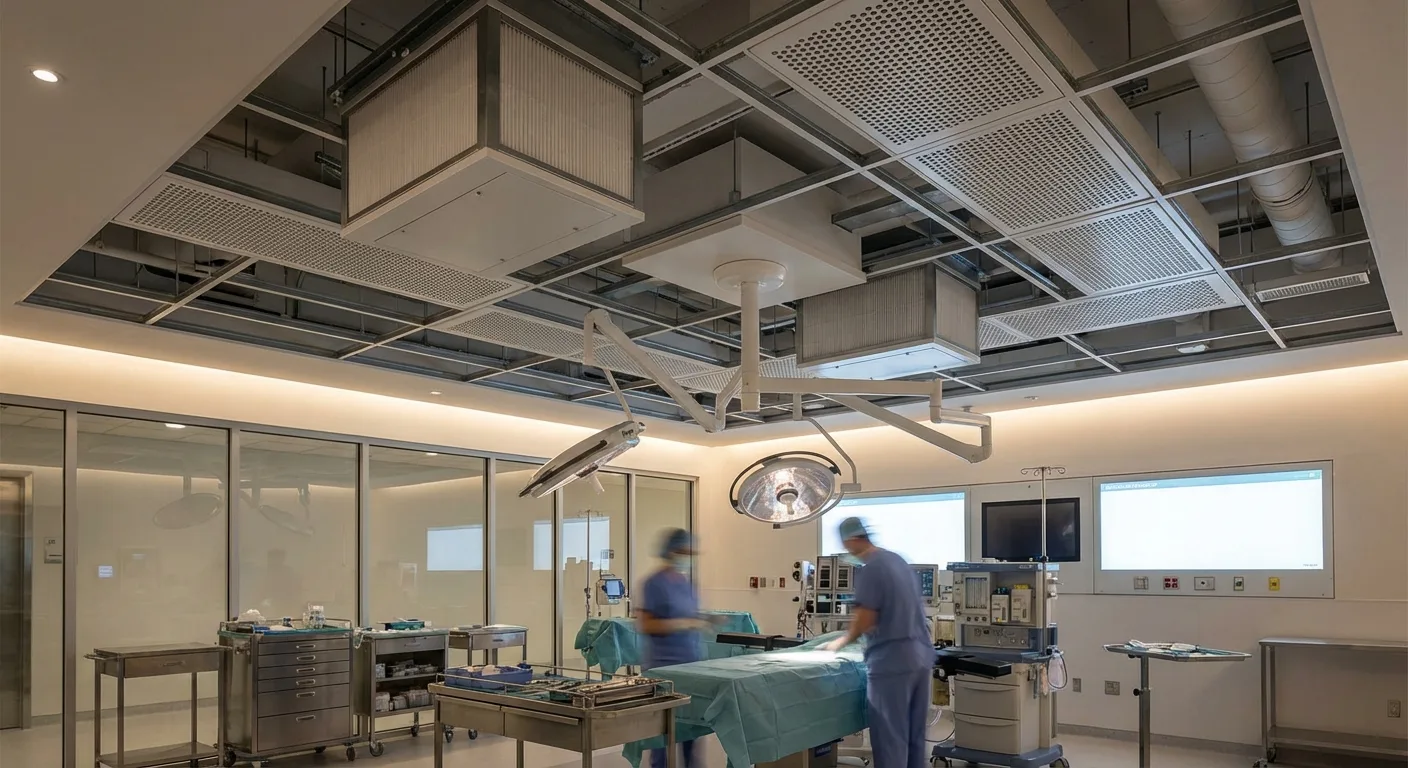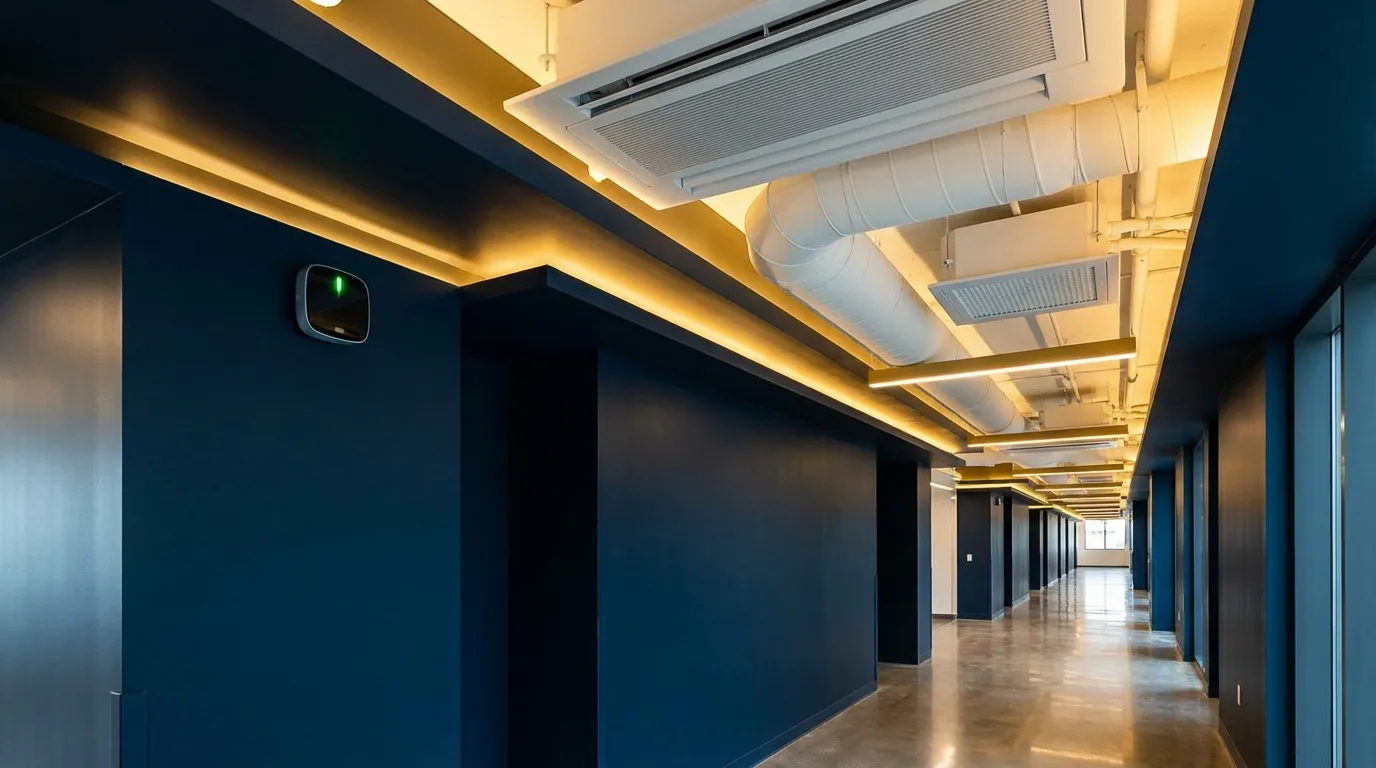
The COVID-19 pandemic profoundly changed society's perception of indoor air quality. People began to understand that "ventilation" is not just about comfort — it is a critical means of infection control. And HVAC systems — as the core of a building's respiratory system — play an irreplaceable role in ventilation, filtration, and air quality control. As the opening article in the "HVAC Health" series, this piece analyzes the technical connection between IAQ and HVAC design from an engineering standards perspective.
- Indoor Air Quality Standards and HVAC Design (This Article)
- Central AC Professional Maintenance Plan
- The Hidden Science of Office HVAC Design
- HVAC Noise Control Engineering
1. ASHRAE 62.1 Ventilation Standard
ASHRAE Standard 62.1[1] is the core reference standard for commercial building ventilation design worldwide. It uses the "Ventilation Rate Procedure" to calculate minimum outdoor air requirements based on space type and occupant density. Outdoor air volume consists of two components:
- People-related component (Rp): Outdoor air volume per person per second (L/s·person), diluting pollutants produced by the human body (CO₂, body odor, etc.)
- Area-related component (Ra): Outdoor air volume per square meter (L/s·m²), diluting volatile organic compounds (VOCs) released by building materials and furnishings
For a typical office space, Rp = 2.5 L/s·person, Ra = 0.3 L/s·m². With an occupant density of 10 persons/100m², approximately 55 L/s of outdoor air is needed per 100m².
2. Taiwan's Indoor Air Quality Management Act
Taiwan's Indoor Air Quality Management Act[2], implemented in 2012, regulates indoor air quality standards for designated premises. Regulated items include:
- CO₂: 8-hour average ≤ 1,000 ppm
- PM2.5: 24-hour average ≤ 35 μg/m³
- PM10: 24-hour average ≤ 75 μg/m³
- Formaldehyde (HCHO): 1-hour average ≤ 0.08 ppm
- TVOC: 1-hour average ≤ 0.56 ppm
Designated premises include hospitals, schools, department stores, cinemas, and large office buildings. Violations can result in fines of NT$50,000 to NT$250,000, with mandatory improvement deadlines.
3. CO₂ Concentration Control Ventilation Strategies
CO₂ concentration is the most intuitive indicator of adequate indoor ventilation. Human respiration is the primary source of indoor CO₂, and when ventilation is insufficient, CO₂ concentrations rise continuously. Research shows that cognitive function begins to decline when CO₂ concentrations exceed 1,000 ppm[3].
Demand-Controlled Ventilation (DCV) uses CO₂ sensors to monitor indoor concentrations in real time and dynamically adjusts outdoor air intake. In spaces with highly variable occupancy (such as conference rooms, restaurants, shopping malls), DCV can significantly reduce outdoor air volume and HVAC load during low-occupancy periods while ensuring IAQ, achieving energy savings of 15–25%.
4. PM2.5 Filtration System Design
Taiwan's outdoor PM2.5 concentrations are affected by monsoons, dust storms, and local pollution, with some areas having above-average annual values. The HVAC system's filtration efficiency directly determines indoor PM2.5 levels[4]:
- Pre-filters (MERV 8): Can filter particles larger than 3 μm, with limited effectiveness for PM2.5
- Medium-efficiency filters (MERV 13): Can filter most PM2.5; ASHRAE recommends this as the minimum standard for commercial buildings
- High-efficiency filters (HEPA): Filtration efficiency ≥ 99.97% (0.3 μm), used in hospitals, cleanrooms, and other high-requirement facilities
Higher filtration grades mean greater air resistance and higher fan energy consumption. Engineers must balance filtration efficiency with system energy consumption, selecting filtration solutions matched to space requirements.
5. Energy Recovery Ventilators and Fresh Air Systems
While introducing outdoor air to improve IAQ, it also brings additional HVAC load (especially during Taiwan's hot, humid summers). Energy Recovery Ventilators (ERV) recover 60–80% of energy through heat and moisture exchange between exhaust and supply air[5], significantly reducing the energy needed for outdoor air treatment.
For IAQ improvement in existing buildings, an independent fresh air system paired with an energy recovery ventilator is the most cost-effective solution — it can improve ventilation quality and air filtration capability without major modifications to existing HVAC systems.
Conclusion
Indoor air quality is an essential health dimension in HVAC system design. Adequate ventilation volume, effective air filtration, and intelligent control strategies — all three are indispensable. In the next article, we will explore how to ensure HVAC systems continue to provide healthy indoor environments throughout their service life through professional maintenance plans.