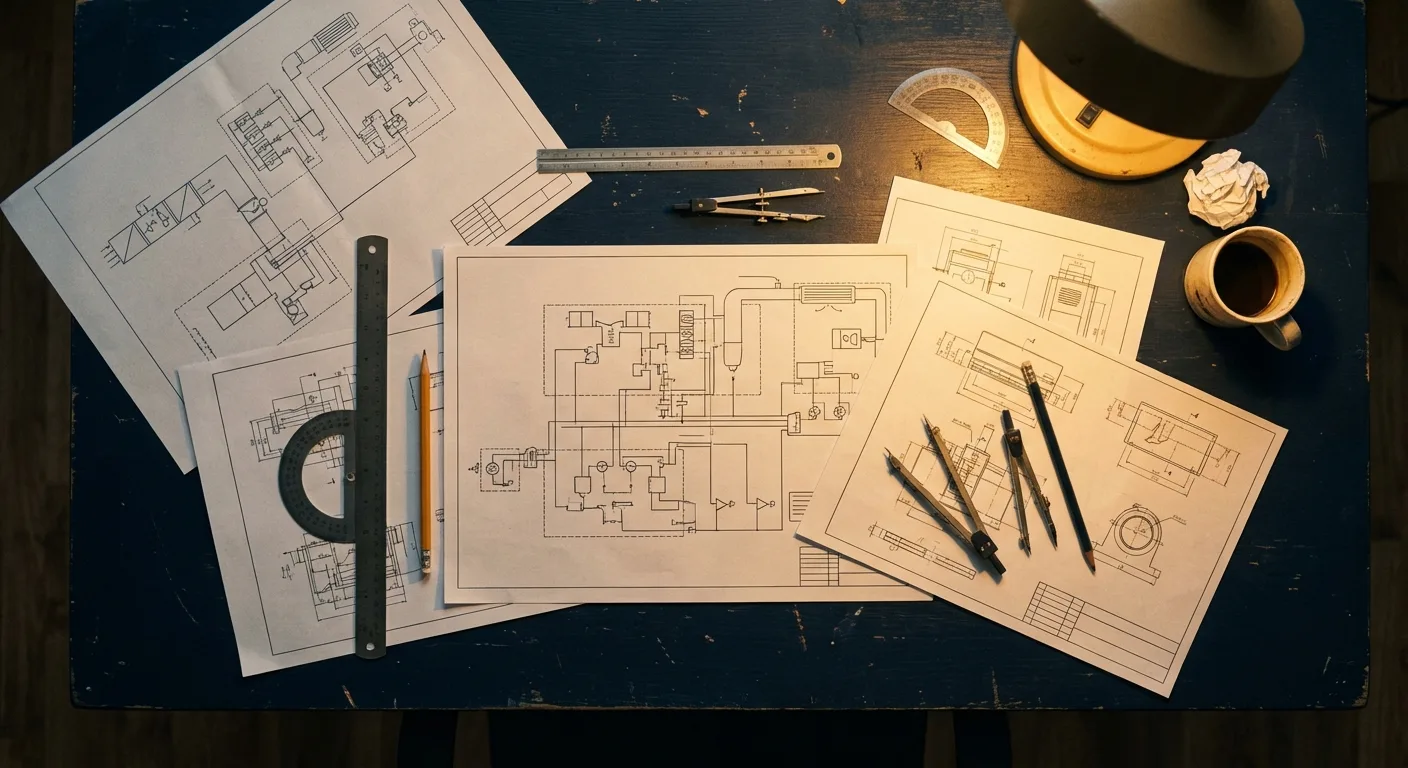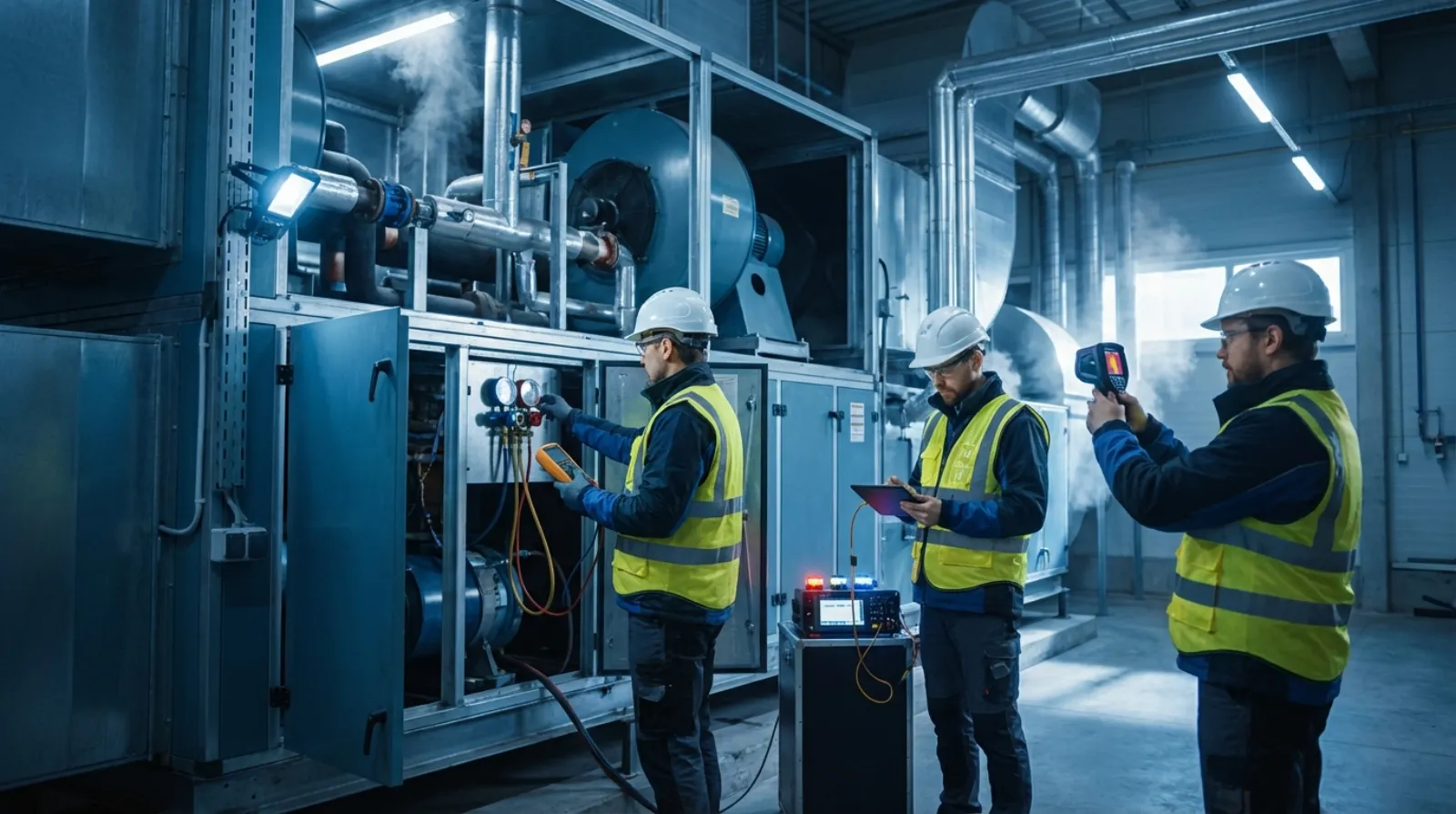
No matter how thorough the HVAC system design or how excellent the equipment quality, without rigorous acceptance procedures, building owners may still face issues such as underperforming operational efficiency, excessive energy consumption, and insufficient indoor comfort. This article takes an engineering practice perspective to systematically analyze each phase and technical key point of HVAC project inspection and acceptance, providing actionable acceptance guidance for building owners and engineering teams.
1. Why Does HVAC Acceptance Require Professional Expertise?
HVAC systems are a classic example of concealed works — once piping is embedded in ceilings and walls, visual inspection becomes nearly impossible, and equipment operating parameters require instrument measurement to determine compliance. Common concerns for building owners include: post-completion room temperatures failing to meet design values, insufficient or excessive cooling in certain zones, noise exceeding expectations, and electricity costs significantly higher than estimates. Most of these problems stem from oversights during the acceptance process[1].
The core value of professional acceptance lies in transforming subjective "feels fine" assessments into objective data verification. Through systematic inspection procedures, each item is confirmed to verify whether equipment specifications, construction quality, and system performance comply with design specifications and contract requirements. The quality of acceptance directly affects the system's operational efficiency and energy performance over the next 15 to 20 years.
2. Pre-Acceptance Preparation: Equipment Arrival Inspection and Document Review
The first step of acceptance does not begin after system completion, but should start when equipment and materials arrive on site. Arrival inspection is the critical step to ensure "what was purchased matches what was specified."
Equipment Brand, Specification, and Model Verification
Cross-reference the contract specifications and design drawings to verify each item's brand, model, specifications, and quantity. Key items to confirm include: chiller cooling capacity (RT or kW) and refrigerant type; air handling unit and fan airflow volume (CMM) and static pressure (mmAq); pump flow rate (LPM) and head (mAq); and control valve size and pressure rating[2].
Factory Inspection Reports and Certificates
All major equipment should come with factory inspection reports, including performance test data and certificates of compliance. Imported equipment should be verified for international certifications (such as AHRI certification, CE marking), while domestic equipment should comply with CNS standards. Refrigerant piping must have material certificates and pressure test reports.
Construction Drawings vs. As-Built Drawings Comparison
Field changes are inevitable during construction, and contractors should produce as-built drawings that faithfully reflect actual construction conditions. During acceptance, design drawings and as-built drawings should be compared for discrepancies, confirming all changes have been approved by the design team and do not affect system performance[3].
3. Piping System Acceptance: Pressure Testing, Flushing, and Insulation
The piping system represents the largest scope of work in HVAC projects and is the area most prone to construction quality issues. Piping acceptance must be completed before concealed works are closed (ceiling panels installed, pipe chases sealed).
Refrigerant Piping Nitrogen Pressure Testing Standards
After welding of refrigerant copper piping is complete, leak testing must be performed using dry nitrogen. Test pressures depend on the refrigerant type: for R-410A systems, high-side test pressure is typically 4.15 MPa (approximately 600 psig), and low-side is 1.5 MPa (approximately 215 psig). Test duration must be at least 24 hours, during which pressure drop must not exceed specified values[4]. After pressure testing, a vacuum pump should evacuate the system to below 500 microns to confirm no moisture remains.
Chilled Water Piping Hydrostatic Testing
After installation of chilled water piping (including condenser water piping), hydrostatic testing must be performed. Per CNS and general engineering specifications, test pressure is 1.5 times the working pressure, held for at least 2 hours, with pressure drop not exceeding 0.5 kg/cm². Pipe flushing should continue until the discharge water is clear, preventing weld slag, metal filings, and other debris from remaining in the system and damaging valves and pumps[5].
Ductwork Air Leakage Testing
Ductwork airtightness directly affects supply air efficiency and energy consumption. Per SMACNA (Sheet Metal and Air Conditioning Contractors' National Association) standards, ductwork is classified into three seal classes — A, B, and C — based on pressure class, each with different allowable leakage rate standards[6]. High-pressure duct systems (such as cleanroom applications) require leakage testing to confirm rates are within allowable limits. For general commercial HVAC medium- and low-pressure ducts, at minimum, visual inspection and sealing verification of critical joints should be performed.
Insulation Quality Inspection Points
Poor insulation installation is a common cause of condensation, dripping, and energy waste. Inspection points include: whether insulation material thickness meets design specifications, whether joints are tight with no gaps, whether valves and flanges are completely covered, and whether the vapor barrier is continuous without damage. Insulation on chilled water piping is especially critical — any insulation defect will cause severe condensation in high-temperature, high-humidity environments.
4. System Commissioning and TAB Testing, Adjusting, and Balancing
After piping acceptance is complete and the system is charged with operating media, the commissioning phase begins. Commissioning is not simply "turning it on to see if it works" — it is a systematic confirmation that every operating parameter falls within the design range.
Refrigerant Charge and Operating Parameter Verification
Refrigerant system commissioning should confirm: refrigerant charge matches manufacturer recommendations, compressor operating current does not exceed rated values, high and low pressures are within normal range, superheat and subcooling are within reasonable ranges (typically superheat 5–8°C, subcooling 3–5°C), oil pressure differential is normal, and there are no abnormal vibrations or noise. Chiller leaving water temperature should reach the design value (typically 7°C).
Three Phases of TAB
TAB (Testing, Adjusting, Balancing) is the most critical technical component of HVAC acceptance, ensuring that the system's actual airflow and water flow distribution matches design values[7]. TAB consists of three phases:
- Testing: Using calibrated instruments to measure airflow, water flow, temperature, pressure, and other parameters at various system points to establish baseline operating data
- Adjusting: Based on test results, adjusting dampers, valves, sheaves, and variable frequency drive frequencies to bring each terminal's airflow and water flow closer to design values
- Balancing: Under conditions where all terminals operate simultaneously, iteratively fine-tuning until the overall system flow distribution is balanced and each terminal's flow deviation from design values is within allowable limits
Airflow Balancing Testing and Adjustment
Airflow balancing requires measuring the actual airflow at every supply air outlet and calculating the percentage deviation from design airflow. Per ASHRAE Standard 111, airflow deviation at each outlet should generally be controlled within ±10% of design values[8]. Measurement tools include anemometers (hot-wire or vane type), capture hoods (balometers), and Pitot tubes. If deviations exceed allowable ranges, damper positions must be adjusted, ductwork checked for blockages or leaks, or duct layouts modified.
Water Flow Balancing Testing and Adjustment
Water flow balancing in chilled water and condenser water systems is equally critical. Water flow to each air handling unit or fan coil unit should be measured using ultrasonic flowmeters or built-in flow indicators on balancing valves. Water flow deviation is typically required to be within ±10% of design values. Pump actual operating points should fall within the high-efficiency range of the performance curve, avoiding excessive deviation that causes energy waste or insufficient flow.
Need professional assistance with HVAC project acceptance? Contact our engineering team for independent third-party acceptance technical services for your project.
ASHRAE 111 and NEBB Standards
TAB work should be performed in accordance with internationally recognized standards. ASHRAE Standard 111, "Measurement, Testing, Adjusting, and Balancing of Building HVAC&R Systems," provides a complete technical methodology[8]. NEBB (National Environmental Balancing Bureau) publishes Procedural Standards with more explicit specifications for TAB technician qualifications and work procedures[9]. While Taiwan has no regulations mandating specific TAB standards, professional acceptance should use these international standards as technical references to ensure acceptance results are credible and traceable.
5. Performance Verification: Temperature, Humidity, Noise, and Energy Consumption
After TAB is complete and the system's flow distribution approaches design values, the next step is to verify whether the system's final performance output meets the building owner's operational requirements.
Design Temperature and Humidity Verification
Under full load or near-full load conditions, measure indoor temperature and relative humidity in each air-conditioned zone to confirm whether design conditions are achieved. Typical design temperature for general commercial spaces is 24–26°C with 50–60% relative humidity. Measurements should be taken after the system has been running stably for at least 2 hours, with outdoor temperature and humidity conditions recorded as reference baselines. Special spaces (such as server rooms, laboratories, cleanrooms) have acceptance standards based on their specific design specifications.
Noise Measurement (NC Values)
HVAC system noise is an important factor affecting indoor environmental quality. Noise measurements are typically expressed as NC (Noise Criteria) values, with different space types having different NC design standards: offices typically require NC 35–40, conference rooms NC 25–30, and hospital patient rooms NC 25–35[10]. During measurement, non-HVAC noise sources should be turned off, and an integrating sound level meter should be used for octave band spectrum analysis to confirm that sound pressure levels in each frequency band are below the NC curve.
System Energy Consumption vs. Design Values
Energy verification is a key indicator for evaluating overall HVAC system efficiency. During commissioning, record the actual power consumption of major equipment (chillers, pumps, fans, cooling towers), calculate the system's overall energy efficiency index (such as kW/RT), and compare with projected values from the design phase. If actual energy consumption is significantly higher than design values, TAB data and equipment operating conditions should be reviewed to identify the cause of the performance gap. This data also serves as the baseline for operational-phase energy monitoring.
6. Deficiency Tracking and Warranty Management
Issues discovered during the acceptance process require a systematic management mechanism to ensure every deficiency is tracked to completion.
Deficiency Classification and Remediation Deadlines
Acceptance deficiencies are typically classified into three levels: Level A for major deficiencies (affecting system safety or primary functions, such as refrigerant leaks or chiller failure to start), requiring immediate remediation before subsequent acceptance can proceed; Level B for general deficiencies (affecting partial functions or quality, such as insufficient airflow at individual outlets or localized insulation detachment), to be remediated within agreed deadlines; Level C for minor deficiencies (cosmetic imperfections or incomplete documentation), which may be remediated during the warranty period. All deficiencies should be documented in writing, including discovery date, location, description, remediation deadline, and responsible party.
Performance Tracking During Warranty Period
HVAC system warranty periods typically range from one to two years. The warranty period should not be limited to reactive fault handling but should proactively include performance tracking. At least two system performance reviews (one each in summer and winter) are recommended during the warranty period to confirm system performance under different load conditions. A comprehensive performance re-verification should be conducted before warranty expiration as the basis for warranty settlement.
Maintenance Handover and Operator Training
Upon completion of acceptance, the contractor should transfer complete technical documentation to the building owner, including: as-built drawings, equipment operation manuals, maintenance manuals, TAB reports, spare parts lists, and warranty certificates. Simultaneously, the contractor should provide system operation training for the owner's maintenance personnel, covering daily start/stop procedures, basic troubleshooting, filter replacement timing, and criteria for identifying abnormal conditions that require professional vendor attention.
Conclusion
HVAC project acceptance is a highly professional and systematic undertaking. From the first equipment arrival inspection to final performance verification and document handover, every step requires technical knowledge and practical experience. For building owners, engaging an independent refrigeration and air conditioning engineer to participate in acceptance not only ensures engineering quality but also represents an investment guarantee for system operational efficiency and energy costs over the next decade or more. Rigorous acceptance is the critical turning point for HVAC projects transitioning from "construction complete" to "reliable operation."